Ultimate Study Guide: ASVAB, GED, ACT, MCAT & TEAS Exam Prep

Ace the ASVAB, GED, ACT, MCAT, or TEAS with targeted strategies, real practice questions, and expert tips built for serious test-takers in 2026.
📋 Table of Contents (11 sections) ▼
Introduction
To succeed on standardized tests, nothing beats excellent test preparation. Brushing up with a well-structured study guide is one of the most effective ways to achieve top scores.
Whether you're getting ready for college entrance exams, military qualification tests, or professional certification assessments, you should have a clear plan for test prep. Reason? Each standardized test is designed to assess specific skills and knowledge, which means it is necessary to use targeted study methods and example questions to maximize performance. In 2026, test-takers have more high-quality prep resources available than ever before—from AI-assisted flashcard tools to adaptive practice platforms—but that abundance makes having a focused, structured approach even more important.
Standardized tests are used for many reasons, from determining eligibility for higher education to assessing aptitude for specialized careers.
- Exams like the ACT and GED evaluate academic proficiency, often serving as a gateway to college admissions or high school equivalency certification.
- The MCAT is essential for aspiring medical students, testing their critical thinking and scientific reasoning skills.
- Military candidates take the ASVAB, which assesses their strengths and suitability for various military roles.
- The TEAS is a crucial exam for those entering nursing programs, measuring key competencies in reading, science, and mathematics.
Despite their differences, there are tried and true ways to prepare for each. With structured study materials and ample practice, you'll be ready for the test when the time comes. The strategies in this guide are grounded in current research on memory retention, spaced repetition, and active recall—methods that have consistently outperformed passive re-reading in studies on academic performance.
Key Takeaways
This article serves as the ultimate study guide for standardized exams. It will give you comprehensive strategies, sample questions, and expert tips tailored to each test.
If you're aiming for a high ACT score, want to master the ASVAB, or get better prepared for the MCAT, this guide will equip you with essential knowledge, memory retention techniques, and the confidence to improve your test performance.
Read on to gain a clearer understanding of how to approach each exam to achieve maximum results. By the time you finish, you'll have a clear picture of what each test covers, which study tools are worth your time, and how to build a prep routine that actually sticks.
What is a Study Guide?
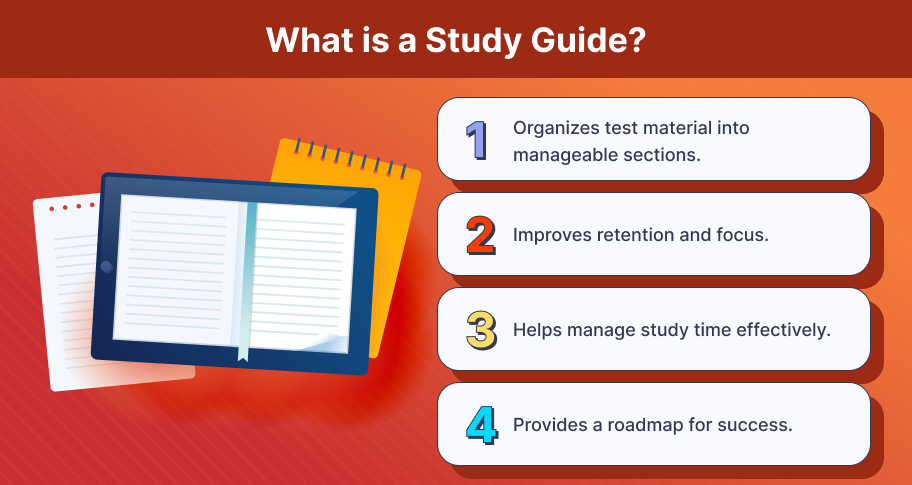
A study guide is a structured learning tool designed to help students prepare for exams by organizing test content into manageable sections.
It is like a roadmap for standardized test prep. A study guide takes complex subjects and breaks them down into easy-to-understand units. Want to boost your comprehension and recall? Study guides help! They can come in all shapes and sizes, too—summaries, outlines, flashcards, practice tests—you name it. In recent years, digital study guides have become increasingly popular, with interactive formats that let learners check their understanding in real time rather than waiting until a full practice exam is complete.
The point of a study guide is to reinforce main concepts and improve retention.
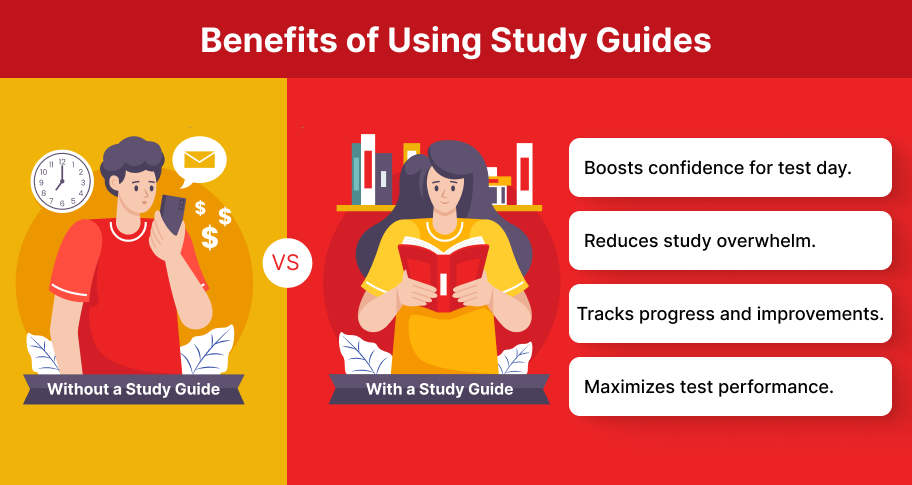
One of the main benefits of using a study guide is that it organizes information logically, so that you can focus on high-priority topics.
- Instead of cramming large amounts of information at once, students can study in structured sessions.
- They make it easier to cover all relevant material without feeling overwhelmed.
- A well-organized guide also helps you track your progress, so you can see how far you've come and how much ground remains before test day.
Additionally, study guides often incorporate example questions, which let learners test their knowledge and familiarize themselves with the exam format. Exposure to realistic practice questions is especially valuable because it reduces the element of surprise on test day and helps you build the mental fluency needed to work quickly under timed conditions.
Using a study guide also improves time management by helping students allocate study time effectively. Test-takers can maximize their preparation and reduce last-minute stress.
Finally, structured review sessions using study guides promote active learning techniques, such as summarization and self-quizzing, which support memory retention. Cognitive science research consistently shows that retrieving information from memory—rather than simply re-reading it—strengthens long-term recall far more effectively.
Overall, a well-designed study guide is an essential tool for mastering any standardized test.
ASVAB Study Guide
Overview of the ASVAB
The Armed Services Vocational Aptitude Battery (ASVAB) is a standardized test used to assess a candidate's qualifications for enlistment in the U.S. military. It measures abilities in different academic and technical areas to determine the test-taker's suitability for various military occupational specialties. Each branch of the military—Army, Navy, Air Force, Marine Corps, Coast Guard, and Space Force—uses ASVAB scores to match recruits with roles that align with their strengths. As of 2026, the Space Force continues to grow as a branch, and strong ASVAB scores in technical and science-related subtests have become increasingly important for candidates interested in those specialized roles.
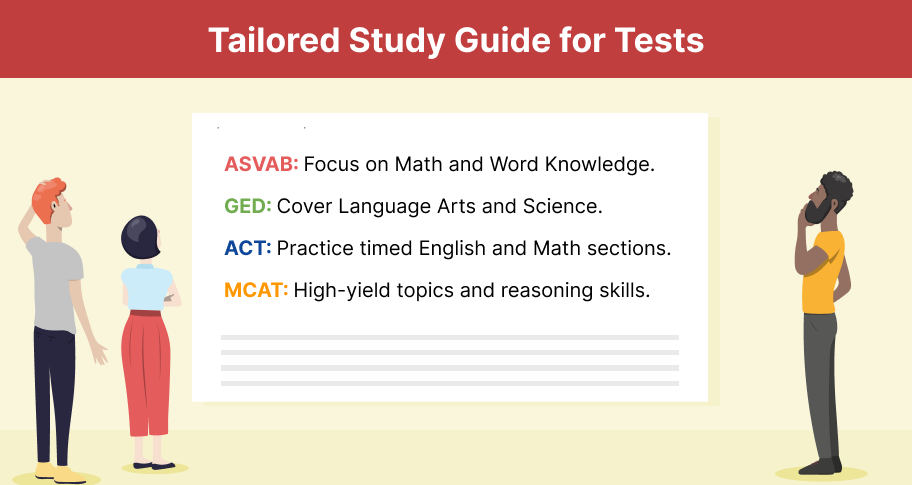
The ASVAB consists of multiple-choice questions and is administered in two formats: the computer-adaptive test (CAT-ASVAB) and the paper-and-pencil version. The test includes nine subtests (or ten in the paper version) that cover subjects from mathematics to mechanical comprehension. Scores from specific sections contribute to the Armed Forces Qualification Test (AFQT) score, which determines enlistment eligibility. The AFQT score is derived specifically from the Arithmetic Reasoning, Word Knowledge, Paragraph Comprehension, and Mathematics Knowledge subtests—so these four areas deserve particular focus in your prep plan.
Sections Covered in the ASVAB
- Arithmetic Reasoning (AR) – Tests ability to solve word problems using mathematical reasoning.
- Word Knowledge (WK) – Measures vocabulary understanding and synonym recognition.
- Paragraph Comprehension (PC) – Evaluates ability to interpret written information.
- Mathematics Knowledge (MK) – Covers fundamental math concepts, including algebra and geometry.
- General Science (GS) – Tests knowledge of biology, chemistry, physics, and earth sciences.
- Electronics Information (EI) – Assesses understanding of electrical circuits, systems, and concepts.
- Auto and Shop Information (AS) – Evaluates mechanical and automotive knowledge.
- Mechanical Comprehension (MC) – Measures understanding of mechanical and physical principles.
- Assembling Objects (AO) – Tests spatial awareness and ability to visualize how objects fit together.
Study Tips for ASVAB Success
1. Break Down Sections
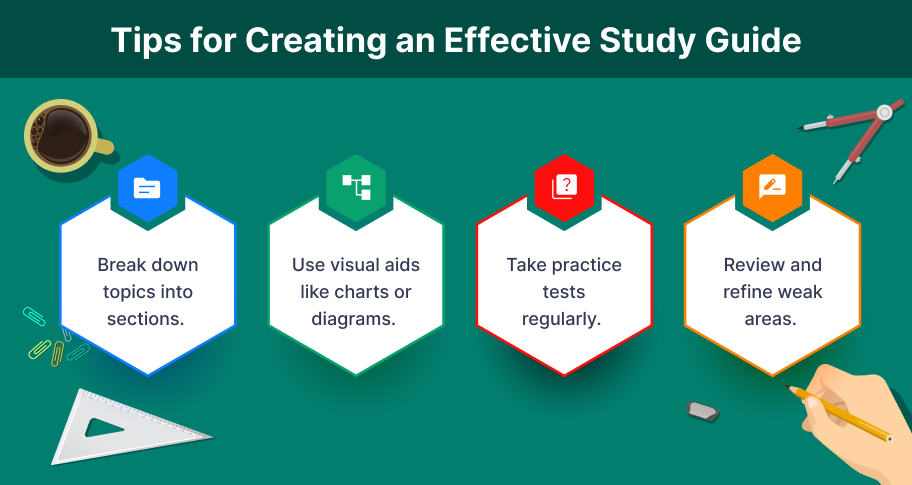
Rather than tackling all subjects at once, focus on one or two sections at a time. Identify your weakest areas and dedicate extra study time to them. A useful starting point is to take a diagnostic ASVAB practice test—many are available for free online—and use the results to build a prioritized study schedule. This targeted approach ensures you're spending the most time where it will have the greatest impact on your AFQT score.
2. Use Timed Practice Tests
The ASVAB is a timed exam, so practice under timed conditions to improve speed. Full-length practice tests also build stamina for test day. On the CAT-ASVAB, the adaptive nature of the test means the difficulty of each question depends on how you answered the previous one—so practicing pacing and maintaining accuracy early in each subtest is especially important.
3. Strengthen Vocabulary and Reading Skills
The Word Knowledge and Paragraph Comprehension sections can be challenging without a strong vocabulary. Read books, use flashcards, and take vocabulary quizzes to expand word recognition. Reading a wide range of materials—from news articles to science blogs—also builds the contextual comprehension skills tested in the Paragraph Comprehension subtest.
4. Master Math Fundamentals
Many test-takers struggle with Arithmetic Reasoning and Mathematics Knowledge. Review algebra, geometry, fractions, and word problem strategies to boost confidence. Pay particular attention to ratio and proportion problems, percentage calculations, and basic equation solving, as these appear consistently across both math subtests.
5. Make Use of Online Resources and Study Guides
Several free and paid resources provide structured ASVAB study materials, including video tutorials, quizzes, and full-length practice exams. In 2026, platforms like Khan Academy continue to offer free, high-quality coverage of math and science fundamentals that map directly onto ASVAB content areas.
Example Questions
1. Arithmetic Reasoning
A car travels 240 miles in 4 hours. What is the average speed of the car in miles per hour?
A. 50
B. 55
C. 60
D. 65
Answer: C. 60 (240 ÷ 4 = 60 mph)
2. Word Knowledge
Choose the word that best matches the meaning of the underlined word:
"The scientist made a prudent decision when handling the chemical reaction."
A. Reckless
B. Wise
C. Hasty
D. Uncertain
Answer: B. Wise
Recommended Resources for ASVAB Prep
1. Official ASVAB Practice Sites:
- Official ASVAB Website – www.asvabprogram.com
- Military.com ASVAB Practice Tests – www.military.com
2. ASVAB Study Books:
- ASVAB for Dummies (Recommended for easy-to-understand explanations)
- Kaplan ASVAB Prep (Provides in-depth strategies and practice tests)
3. Online Study Platforms:
- Khan Academy (For brushing up on math and science topics)
- Quizlet (For vocabulary flashcards and memory aids)
- March2Success (A free Army-sponsored online study program that provides lessons and practice tests specifically aligned with ASVAB content areas)
GED Study Guide
Overview of the GED
The General Educational Development (GED) test is designed for individuals who did not complete high school but want to earn an equivalent diploma. Passing the GED shows that a person has the same level of academic knowledge and skills as a high school graduate. It is a credential widely recognized by colleges, employers, and military branches. In 2026, the GED remains one of the most accessible pathways for adults seeking to re-enter education or improve their employment prospects, and the fully online proctored testing option introduced in recent years has made the exam more convenient than ever to schedule and complete.
The GED test is computer-based and consists of four subject areas. It is not a pass-or-fail exam but requires a minimum score of 145 on each subject test to earn the diploma. Scoring 165-174 indicates college readiness, while 175-200 may earn college credit. Test-takers must be at least 16 years old, though specific age and eligibility requirements vary by state. It's worth checking your state's current requirements directly at ged.com, as policies can vary and are occasionally updated.
Sections Covered in the GED
The GED consists of four subject tests, each measuring essential academic skills:
- Reasoning Through Language Arts (RLA)
- Reading comprehension, grammar, and writing skills
- Includes a written essay (Extended Response)
- Emphasizes analyzing nonfiction texts and constructing well-supported arguments
- Mathematical Reasoning
- Covers algebra, geometry, and basic arithmetic
- Includes problem-solving and data interpretation
- A calculator is allowed for most questions
- Science
- Tests understanding of life science, physical science, and earth/space science
- Focuses on data interpretation, scientific reasoning, and experiment analysis
- Requires critical thinking rather than memorization of facts
- Social Studies
- Covers U.S. history, civics, economics, and geography
- Includes document analysis and interpretation of historical texts
- Emphasizes real-world applications of social studies concepts
Study Tips for GED Success
1. Focus on Weaker Areas
Take a diagnostic test to determine which sections need the most improvement. Allocate more study time to areas where you struggle. The official GED Ready practice test, available through ged.com, is particularly valuable here because it uses real test content and provides a prediction of whether you're likely to pass each subject—giving you a data-driven starting point for your study plan.
2. Use Flashcards for Quick Review
Flashcards are particularly helpful for memorizing vocabulary, math formulas, and key historical facts. Apps like Quizlet offer pre-made GED study flashcards. You can also create your own custom decks based on the topics you find most difficult, which adds an extra layer of active recall to your preparation.
3. Master Time Management
Each GED section is timed, so practicing under test conditions is crucial. Time yourself while answering questions. For the RLA section in particular, students often underestimate how long the Extended Response essay takes to plan, draft, and review—so practice writing timed essays of 45 minutes from start to finish.
4. Improve Essay Writing Skills
The RLA section includes an Extended Response (essay). Practice organizing ideas, using evidence from texts, and writing structured arguments. A strong Extended Response uses a clear claim in the introduction, at least two body paragraphs with direct evidence from the provided passage, and a concise conclusion that reinforces your main point without simply repeating it.
5. Take Practice Tests Regularly
Full-length practice tests can help you reduce anxiety. The more you practice, the more confident you will feel on test day. Aim to take at least one full-length practice test per subject before your scheduled exam date, and review every incorrect answer carefully to understand the reasoning behind the correct response.
Example Questions
1. Reasoning Through Language Arts (RLA)
Question:
Read the sentence below and select the correct revision:
"The student completed her assignment quickly she wanted to have extra time to review."
A. The student completed her assignment quickly, she wanted to have extra time to review.
B. The student completed her assignment quickly; she wanted to have extra time to review.
C. The student completed her assignment quickly. She wanted, to have extra time to review.
D. The student completed her assignment, quickly she wanted to have extra time to review.
Answer: B (The semicolon correctly joins two independent clauses.)
2. Mathematical Reasoning
Question:
A rectangle has a length of 8 inches and a width of 5 inches. What is the area of the rectangle?
A. 13 square inches
B. 30 square inches
C. 40 square inches
D. 80 square inches
Answer: C (Area = length × width → 8 × 5 = 40)
Recommended Resources for GED Prep
1. GED Prep Books:
- Kaplan GED Test Prep – Provides comprehensive content review and practice questions.
- Princeton Review Cracking the GED – Offers strategies for test-taking and essay writing.
- GED Study Guide by Mometrix – Includes detailed explanations and test-taking strategies.
2. Online Study Platforms:
- GED Testing Service (www.ged.com) – The official site for practice tests and registration.
- Khan Academy (www.khanacademy.org) – Free lessons in math, science, and social studies.
- GED Academy – A structured online course with personalized study plans.
3. Mobile Apps for Studying:
- Quizlet (Flashcards for vocabulary and concepts)
- Pocket Prep GED (Practice tests with explanations)
ACT Study Guide
Overview of the ACT
The ACT (American College Testing) is a standardized exam used for college admissions in the United States. It assesses students' academic readiness for college and is accepted by virtually all universities. Many students take the ACT to strengthen their college applications, qualify for scholarships, or meet university admission requirements. As of 2026, the ACT continues to be widely used alongside the SAT, and a growing number of institutions have reinstated test-score requirements after a period of test-optional policies during the early 2020s—making a strong ACT score more important again for competitive applicants.
The ACT consists of four mandatory sections—English, Mathematics, Reading, and Science—as well as an optional Writing (essay) section. The test is scored on a scale of 1 to 36, with the final composite score being an average of the four section scores. A perfect score is 36, and most competitive colleges look for scores in the high 20s or above. The Writing section is scored separately on a 2 to 12 scale.
The test is timed, with a total of 2 hours and 55 minutes for the four main sections and an additional 40 minutes for the optional Writing test. Time management is crucial, as students must answer 215 questions within the allotted time. Because of the pace required, many test-takers find that practicing individual sections in isolation first—before attempting full-length tests—helps build the specific speed and accuracy needed for each content area.
Sections Covered in the ACT
- English (45 minutes, 75 questions)
- Tests grammar, punctuation, sentence structure, and rhetorical skills.
- Focuses on editing and improving passages.
- Mathematics (60 minutes, 60 questions)
- Covers algebra, geometry, and some trigonometry.
- A calculator is allowed for all questions.
- Reading (35 minutes, 40 questions)
- Measures reading comprehension skills using passages from fiction, social sciences, humanities, and natural sciences.
- Focuses on main ideas, inferences, and author's intent.
- Science (35 minutes, 40 questions)
- Assesses data interpretation, scientific reasoning, and experimental analysis.
- Does not require advanced science knowledge but focuses on critical thinking.
- Writing (Optional, 40 minutes, 1 essay)
- Requires students to analyze a topic and present a well-structured argument.
Study Tips for ACT Success
1. Take Timed Practice Tests
Simulating real test conditions helps improve time management and endurance. The ACT is fast-paced, so practice under timed settings. The official ACT website offers free practice tests that are the closest approximation to what you'll see on test day—these should be your primary practice resource, supplemented by additional materials for targeted content review.
2. Master Grammar Rules for English
The ACT English section heavily tests punctuation, subject-verb agreement, sentence structure, and transitions. Review grammar rules and practice editing passages. Pay close attention to comma usage, apostrophes, and the distinction between run-on sentences and correctly joined independent clauses—these are among the most frequently tested concepts.
3. Strengthen Math Skills
Review algebra, geometry, and trigonometry concepts. Memorize key formulas and practice problem-solving strategies. Unlike the SAT, the ACT does not provide a formula sheet during the exam, so knowing area, volume, and trigonometric ratios from memory is essential.
4. Improve Reading Speed and Comprehension
ACT Reading passages must be completed quickly, so practice skimming and identifying key details without rereading too much. One effective strategy is to read the questions for each passage before reading the passage itself—this gives you a clear idea of what to look for and can significantly reduce the time spent searching for answers.
5. Focus on Science Reasoning
The ACT Science section is not about memorizing science facts but about analyzing charts, graphs, and experiments. Practice interpreting scientific data and drawing conclusions from given information. Students who struggle with this section often do so because they try to apply outside scientific knowledge rather than relying solely on the data presented in the passage—trust the figures in front of you.
Example Questions
1. English (Grammar and Sentence Structure)
Question:
Choose the best revision of the following sentence:
"The teacher, along with the students, were excited for the trip."
A. The teacher, along with the students, were excited for the trip.
B. The teacher, along with the students, was excited for the trip.
C. The teacher along with the students, were excited for the trip.
D. The teacher, along with the students, were excited about the trip.
Answer: B (The singular subject "teacher" requires "was," not "were.")
2. Science (Data Interpretation)
Question:
A researcher records the temperature of a chemical reaction every 10 seconds. The data is as follows:
- 0 sec: 25°C
- 10 sec: 30°C
- 20 sec: 35°C
- 30 sec: 40°C
If the trend continues, what will the temperature be at 50 seconds?
A. 45°C
B. 50°C
C. 55°C
D. 60°C
Answer: B (Temperature increases by 5°C every 10 seconds, so at 50 seconds, it would be 50°C.)
Recommended Resources for ACT Prep
1. Official ACT Prep Books & Guides:
- The Official ACT Prep Guide – Provides real ACT practice tests and explanations.
- Barron's ACT Study Guide – Offers detailed strategies and subject reviews.
- Princeton Review ACT Premium Prep – Includes practice tests and test-taking techniques.
2. Online Study Platforms & Apps:
- ACT Academy (www.act.org) – Free resources and practice questions.
- Khan Academy (www.khanacademy.org) – Great for math and grammar reviews.
- Magoosh ACT Prep – Offers video lessons and practice quizzes.
- Quizlet – Flashcards for ACT vocabulary and grammar rules.
3. Tutoring and Prep Courses:
- Kaplan ACT Prep – Live online classes and tutoring.
- Princeton Review ACT Tutoring – Personalized study plans.
- Local or School-Based ACT Prep Programs – Many schools and libraries offer free or low-cost test prep.
MCAT Study Guide
Overview of the MCAT
The Medical College Admission Test (MCAT) is a standardized, computer-based exam required for entry into most medical schools in the United States and Canada. Designed by the Association of American Medical Colleges (AAMC), the MCAT assesses a candidate's readiness for the rigorous medical education that lies ahead. Admissions committees consider MCAT scores alongside undergraduate GPA, letters of recommendation, and personal statements to evaluate a candidate's potential for success in medical school.
The MCAT is a 7.5-hour marathon, including breaks, making it one of the longest and most challenging standardized tests. It consists of 230 multiple-choice questions across four sections. Scores range from 472 to 528, with a median score around 500. Competitive applicants often aim for a score of 510 or higher, with top medical schools typically expecting scores above 515. According to AAMC data, the average MCAT score among applicants accepted to medical school in recent admissions cycles has held steady at approximately 511-512, underscoring how competitive preparation has become.
The exam's rigorous nature requires extensive preparation, often involving months of study. Most successful test-takers dedicate between three and six months to focused MCAT preparation, depending on their baseline science knowledge and how many hours per week they can commit. Because medical schools place significant emphasis on MCAT performance, a study plan and dedicated prep time are needed for success.
Sections Covered in the MCAT
- Biological and Biochemical Foundations of Living Systems
- Tests knowledge of biology and biochemistry.
- Focuses on processes unique to living organisms, including reproduction, metabolism, and cellular function.
- Incorporates foundational concepts in chemistry and physics relevant to biological systems.
- Chemical and Physical Foundations of Biological Systems
- Assesses understanding of the chemical and physical principles underlying the mechanisms of the human body.
- Includes questions on organic and inorganic chemistry, basic physics, and biochemistry.
- Emphasizes the application of these concepts to biological systems and medical contexts.
- Psychological, Social, and Biological Foundations of Behavior
- Explores the interrelationships between behavior, health, and the social environment.
- Covers psychology, sociology, and biological influences on behavior.
- Highlights the importance of cultural and social factors in health care.
- Critical Analysis and Reasoning Skills (CARS)
- Tests reading comprehension, analysis, and reasoning through passages drawn from humanities and social sciences.
- Requires skills in critical thinking rather than specific scientific knowledge.
- Emphasizes identifying arguments, assumptions, and conclusions.
Study Tips for MCAT Success
1. Focus on High-Yield Topics
Certain topics appear more frequently on the MCAT. Focus on cellular biology, genetics, amino acids, thermodynamics, and behavioral theories. Utilize AAMC's topic lists to prioritize study material. High-yield topics also include enzyme kinetics, the central nervous system, and key psychological frameworks such as Freud's psychosexual stages and Erikson's stages of development—all of which appear regularly across multiple sections.
2. Consistent Practice with Full-Length Tests
Regularly taking full-length practice tests helps build endurance for the lengthy test day and allows you to identify weak areas. Simulate actual test conditions to adapt to the pacing and mental stamina required. The AAMC's official full-length practice exams are the gold standard here—the questions are scored using the same algorithm as the real test, giving you the most accurate prediction of your actual performance.
3. Develop CARS Strategies
For the CARS section, practice active reading strategies such as summarizing paragraphs, identifying the main argument, and recognizing the author's tone. Since CARS doesn't require background knowledge, it's all about interpreting and analyzing texts effectively. Many test-takers find that reading opinion pieces, literary criticism, and philosophical essays in the weeks before the exam helps sharpen the analytical reading skills that CARS demands.
4. Make Use of Anki Flashcards
Anki flashcards are excellent for memorizing biochemical pathways, psychological theories, and key terms. Spaced repetition through Anki can boost long-term retention. In 2026, a wide community of pre-med students shares curated Anki decks specifically designed for the MCAT—searching for decks like "Anking" or "MCAT Bros" on popular pre-med forums can save you significant time building your own card library from scratch.
5. Review and Reflect
After each practice test, thoroughly review incorrect answers to understand mistakes. This reflection process is key to adapting strategies and improving performance over time. Many high scorers recommend spending as much time reviewing a practice test as they spent taking it—a 7.5-hour test warrants an equally thorough debrief to extract maximum learning value from every question.
Example Questions
1. Biological and Biochemical Foundations
Question:
Which of the following enzymes is responsible for the replication of DNA in eukaryotic cells?
A. DNA polymerase
B. RNA polymerase
C. Helicase
D. Ligase
Answer: A (DNA polymerase synthesizes new DNA strands.)
2. CARS (Critical Analysis and Reasoning Skills)
Passage Excerpt:
"The philosophy of existentialism focuses on individual freedom, choice, and responsibility, emphasizing the importance of personal meaning over universal truths."
Question:
Based on the passage, existentialism is most likely to agree with which of the following statements?
A. Human behavior is entirely determined by external forces.
B. Personal freedom is less important than societal norms.
C. Individuals must create their own meaning in life.
D. Objective truth is necessary for personal growth.
Answer: C (Existentialism emphasizes personal meaning and individual freedom.)
Recommended Resources for MCAT Prep
1. Popular Prep Companies:
- Kaplan MCAT Prep (www.kaptest.com) – Offers comprehensive courses, books, and practice exams.
- The Princeton Review (www.princetonreview.com) – Provides in-depth study resources and tutoring.
- Examkrackers – Known for concise study guides and effective practice questions.
2. Online Study Platforms:
- AAMC Official Prep (www.aamc.org) – Real MCAT questions and full-length practice tests.
- UWorld – Extensive question bank with detailed explanations.
3. Mobile Apps for Studying:
- Anki (Spaced repetition for memorization)
- MCAT Self Prep (Free modules and customizable study plans)
- Magoosh MCAT (Video lessons and practice questions)
TEAS Study Guide
Overview of the TEAS
The Test of Essential Academic Skills (TEAS) is a standardized exam used for nursing school admissions in the United States. The exam assesses a student's readiness for healthcare education programs and evaluates academic skills needed for nursing school. Many nursing schools require TEAS scores as part of their admission criteria. With nursing program applications remaining highly competitive in 2026—driven by continued healthcare workforce demand—a strong TEAS score can be a meaningful differentiator in the admissions process.
The TEAS 7 consists of 170 multiple-choice questions across four main sections: Reading, Mathematics, Science, and English & Language Usage. The test is computer-based and lasts 3 hours and 29 minutes. Scores range from 0 to 100, and each school sets its own passing score requirements. Generally, a score of 65-75% is considered competitive, while above 80% is highly competitive for nursing programs. Some highly selective programs in 2026 are now looking for scores above 85%, so it's worth researching the specific benchmark for each school on your application list.
The TEAS exam is designed to test both academic knowledge and the ability to apply that knowledge in real-world nursing scenarios. Since it covers a broad range of topics, thorough preparation is important for achieving a high score.
Sections Covered in the TEAS
1. Reading (45 Questions, 55 Minutes)
- Tests reading comprehension and ability to analyze texts.
- Requires identifying main ideas, drawing conclusions, and understanding logical relationships.
- Includes passages from health-related topics.
2. Mathematics (38 Questions, 57 Minutes)
- Covers basic arithmetic, algebra, and data interpretation.
- Includes solving word problems, working with percentages, ratios, and basic metric conversions.
- Focuses on real-world applications in healthcare.
3. Science (50 Questions, 60 Minutes)
- Tests knowledge of biology, chemistry, anatomy & physiology, and scientific reasoning.
- Emphasizes human body systems, genetics, and chemical interactions.
- Requires understanding of lab procedures and scientific inquiry.
4. English & Language Usage (37 Questions, 37 Minutes)
- Assesses grammar, punctuation, sentence structure, and vocabulary.
- Focuses on medical and healthcare terminology.
- Tests writing clarity and the ability to correct errors.
Study Tips for TEAS Success
1. Master Medical Terminology
A strong understanding of medical terms is essential, especially for the Science and English & Language Usage sections. Create flashcards to memorize key terms. Focus particularly on prefixes and suffixes common in medical language—understanding that "brady-" means slow or "nephro-" relates to the kidney, for example, can help you decode unfamiliar terms you encounter on the exam without having memorized every word individually.
2. Focus on Science Fundamentals
Review core anatomy and physiology concepts, including organ systems, cellular biology, and chemistry basics. Understand principles and how to apply them. The Science section of the TEAS 7 places particular emphasis on the human body systems—cardiovascular, respiratory, digestive, immune, and nervous systems all appear regularly, so a structured review of each system's structure and function is time well spent.
3. Practice Math Problems Daily
Since the Math section focuses on basic calculations, ratios, and data interpretation, practicing real-world nursing-related math problems (medication dosages, IV drip rates) can be beneficial. Even 15-20 minutes of daily math practice can produce noticeable gains in both accuracy and speed over the course of a few weeks of consistent effort.
4. Improve Reading Comprehension
The Reading section requires quick comprehension of passages. Practice reading healthcare-related articles to get comfortable with complex texts. Nursing journals, health news websites, and science magazines are all good sources of practice material that will help you build familiarity with the kind of technical language and evidence-based reasoning the TEAS Reading section rewards.
5. Take Full-Length Practice Tests
Simulate real test conditions to build stamina and improve time management. The ATI Testing website offers official TEAS practice tests that are the most reliable gauge of your readiness—use these strategically in the final weeks of your preparation rather than burning through them too early in the study process.
Example Questions
1. Science (Anatomy & Physiology)
Question:
Which organ system is primarily responsible for regulating body temperature and protecting against environmental hazards?
A. Circulatory system
B. Nervous system
C. Integumentary system
D. Endocrine system
Answer: C (The integumentary system, which includes the skin, helps regulate body temperature and serves as a barrier to protect against the environment.)
2. Mathematics (Ratios & Proportions)
Question:
A nurse must administer 250 mg of medication to a patient, but the available tablets contain 50 mg each. How many tablets should the nurse give?
A. 2 tablets
B. 3 tablets
C. 4 tablets
D. 5 tablets
Answer: D (250 mg ÷ 50 mg per tablet = 5 tablets)
Recommended Resources for TEAS Prep
1. TEAS Prep Books:
- ATI TEAS Study Manual (Official) – The best resource for learning test structure and strategies.
- Mometrix TEAS Study Guide – Offers detailed explanations and test-taking tips.
2. Online Study Platforms & Practice Tests:
- ATI Testing (Official Site) (www.atitesting.com) – Provides full-length practice exams and study materials.
- Mometrix TEAS Online Course – Offers video lessons, quizzes, and practice tests.
3. Mobile Apps for Studying:
- Pocket Prep TEAS – Offers practice questions and explanations.
- Quizlet TEAS Flashcards – Helps with memorizing key terms and concepts.
4. TEAS Tutoring Options:
- Varsity Tutors – Personalized one-on-one tutoring.
- Wyzant – Offers both in-person and online TEAS prep tutors.
8 Study Guide Tips for Success
No matter which standardized test you're preparing for, effective study strategies will improve your performance. Whether you're studying for the ASVAB, GED, ACT, MCAT, or TEAS, using the right approach will enable you to retain information, manage your time well, and feel confident on test day.
1. Create a Study Schedule
Consistency is key when preparing for any exam. Develop a study plan that breaks down topics into manageable chunks. Set specific goals for each study session and stick to a regular schedule. Research on habit formation consistently shows that shorter, daily study sessions produce better retention than occasional marathon cramming sessions—aim for focused blocks of 45-90 minutes with short breaks in between.
2. Use Active Learning Techniques
- Flashcards help reinforce vocabulary, key formulas, and concepts (great for the ASVAB, GED, and TEAS).
- Summarize information in your own words to improve understanding.
- Teach concepts to someone to reinforce your knowledge.
- Use practice problems rather than re-reading notes—actively retrieving information from memory is far more effective than passive review for building long-term recall.
3. Take Full-Length Practice Exams
Simulate real test conditions to build stamina and time management skills. The more practice tests you take, the more comfortable you'll feel. When possible, take practice tests at the same time of day as your scheduled exam—your brain performs differently at different times, and training your focus for the right window can give you a subtle but real performance edge.
4. Manage Test Anxiety
- Practice deep breathing techniques and meditation to stay calm.
- Get adequate sleep before test day—rest is crucial for memory retention.
- Visualize success.
- Arrive at the testing center early to allow yourself time to settle in and mentally prepare before the exam begins.
5. Learn from Mistakes
Reviewing incorrect answers is one of the best ways to improve. Don't just identify the right answer—take time to understand exactly why you got the question wrong and what concept or reasoning gap it reveals. This kind of reflective analysis is what separates test-takers who plateau from those who keep improving with each practice session.
Free ACT Study Guide: English & Math Focus
Preparing for the ACT exam requires study and practice. To help you succeed, we're providing a free study guide focused on two crucial sections: English and Math.
English Section
🔹 Key Topics: Grammar, punctuation, sentence structure, rhetorical skills
🔹 Study Tips: Take practice quizzes, read sample essays, and use flashcards
🔹 Sample Question
Math Section
🔹 Key Topics: Algebra, geometry, probability & statistics
🔹 Study Tips: Solve at least 10 practice problems daily, review formulas, and time yourself on practice questions
🔹 Sample Question
Study Guide Generator
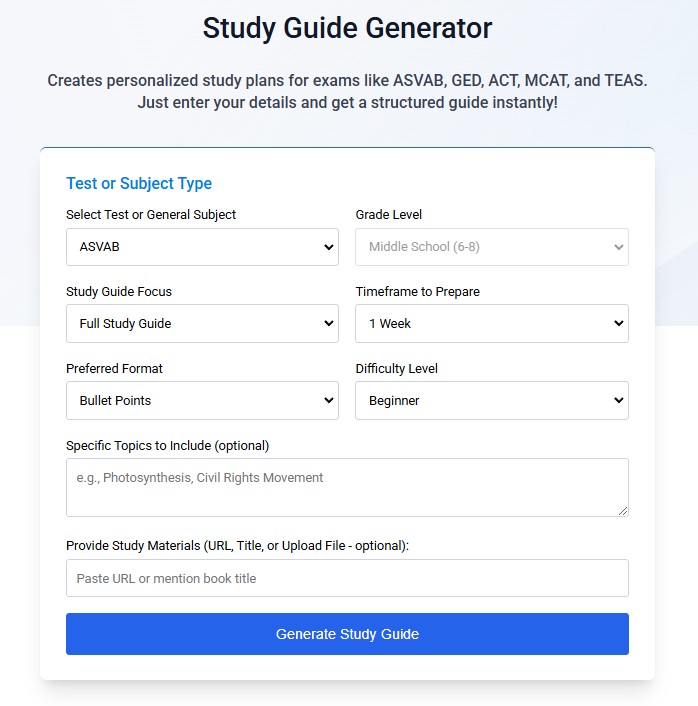
Our Study Guide Creator makes preparing for exams simple and personalized! Whether you're studying for the ASVAB, GED, ACT, MCAT, or TEAS, this tool allows you to create a customized study plan based on your needs. In 2026, AI-powered study tools have become a standard part of effective exam prep—and our generator puts that capability to work for you, delivering a structured plan that adapts to your timeline, subject strengths, and learning preferences.
How to Use It:
- Select Your Test or Subject – Choose from standardized exams like the ASVAB, ACT, or GED.
- Set Your Grade Level – Tailor the guide to your level of understanding.
- Choose Study Guide Focus – Full study guide or specific topics.
- Set a Timeframe – Whether you have one week or more to prepare.
- Pick Your Format – Bullet points, outlines, or in-depth explanations.
- Adjust Difficulty – Beginner, intermediate, or advanced levels.
- Include Study Materials – Add URLs, book titles, or upload files for reference.
- Click "Generate Study Guide" – Get a personalized study plan in seconds!
With our tool, you can study better than ever by targeting the most important content for test success. The generated plan gives you a clear, day-by-day roadmap so you always know exactly what to study next—no more guessing, no more wasted prep time.
Conclusion
A well-structured study guide is one of the most valuable ways to prepare for any standardized test. Whether you're aiming for military career placement (ASVAB), high school equivalency (GED), college admissions (ACT), medical school entry (MCAT), or nursing school qualification (TEAS), the right preparation methods can make all the difference in achieving a high score.
Each test is unique. The ASVAB emphasizes problem-solving and vocational aptitude, the GED tests general academic knowledge, the ACT assesses college readiness, the MCAT challenges critical thinking in medical sciences, and the TEAS measures skills needed for nursing programs. Understanding these distinctions helps you avoid the trap of generic test prep and instead build a strategy that is precisely calibrated to the exam in front of you.
However, with the right study materials and by taking practice exams and refining weak areas, you can approach any exam with confidence. The common thread across all five of these exams is this: consistent, structured, active preparation beats last-minute cramming every single time.
Now is the time to take action! Explore official study guides, online courses, and tutoring services to strengthen your preparation.
Start today—your future depends on it!
Get help with your essay
Browse 135,000+ paper examples, use our AI writing assistant, generate citations and outlines — all included.
Sign Up Now →