01Why Peer Review Matters in Academic Research
It is very tempting, particularly when working on an obscure or narrow topic, to simply type your subject into Google and click the first result that appears. It feels efficient. The page loads in seconds, it looks authoritative, and it might even cite some numbers. But depending on the type of research your course requires, that shortcut can become a serious liability. Most professors require the majority—and sometimes all—of the sources used in a course paper to be peer-reviewed, and submitting a research paper built on unreviewed web content can cost you significant points, even when the underlying argument is strong.
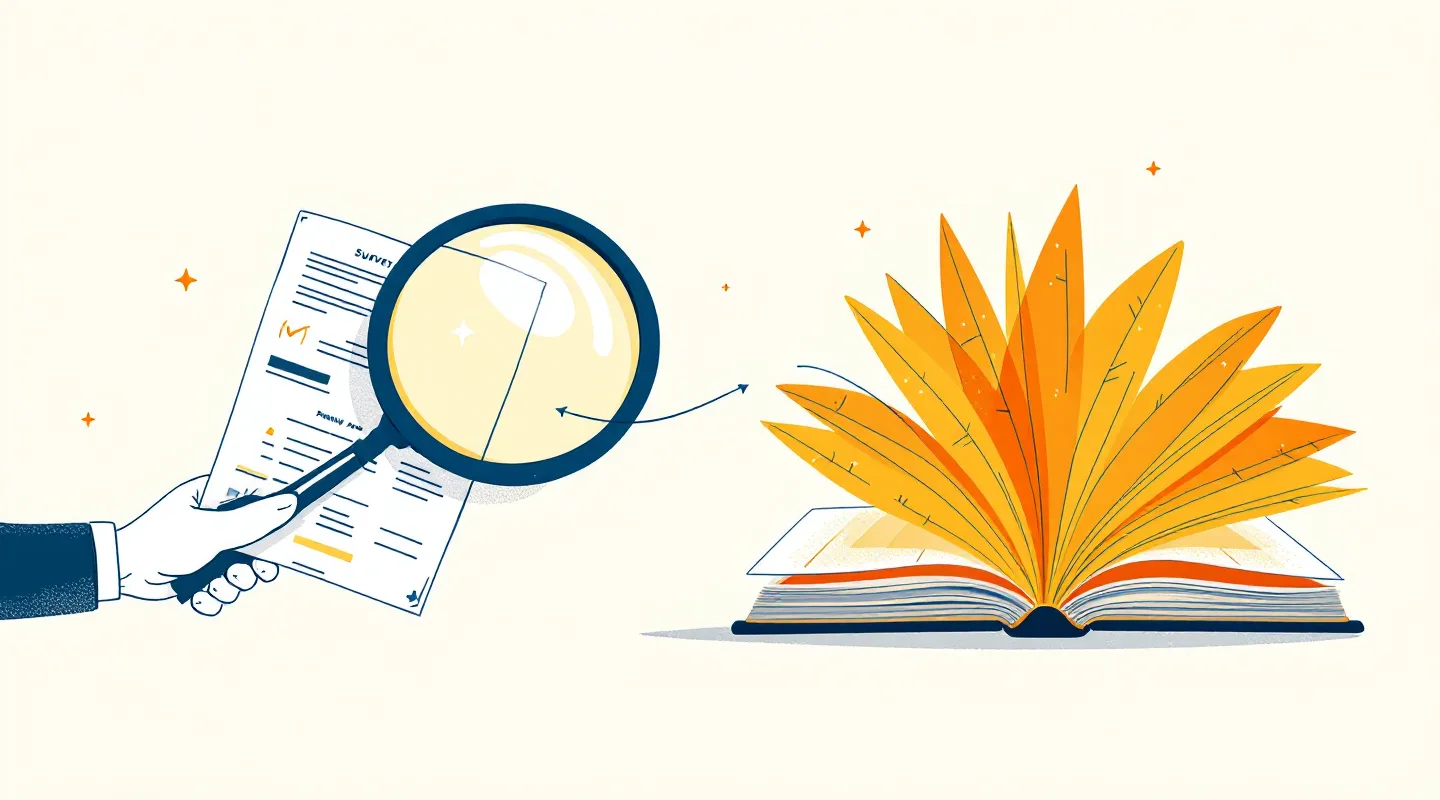
So what makes peer review such a big deal? At its core, peer review is the academic world's quality-control system. Before a scholarly article is accepted by a journal, it is sent—anonymously in most cases—to two or more independent experts in the same field. Those reviewers read the manuscript critically: they assess whether the methodology is sound, whether the conclusions follow logically from the evidence, and whether the work makes a genuine contribution to existing knowledge. If the reviewers find significant problems, the article is either rejected outright or sent back to the author with required revisions. Only after surviving that scrutiny does it get published. This process means that when you cite a peer-reviewed article, you are citing work that the academic community has already vetted—which is precisely why professors trust it.
Peer review is academia's quality-control process: independent experts vet an article's methods and conclusions before it reaches print. That vetting is exactly why professors require it.
02The Safest Method: Academic Databases with Filters
The single most reliable way to guarantee you are reading a peer-reviewed article is to search through a dedicated academic database and apply its peer-review filter before you even look at a result. Databases like ProQuest, JSTOR, EBSCOhost, and PubMed are specifically built to index scholarly literature, and each one allows you to narrow your results to peer-reviewed or "scholarly" journals with a single checkbox or dropdown selection. Your college or university library almost certainly provides free access to at least one of these—check your library's homepage or ask a reference librarian, because the access is already paid for by your institution.
1How to Apply the Filter in Practice
The steps are straightforward but worth walking through in detail. In ProQuest, for example, type your search terms into the main search bar, then look for a panel on the left-hand side of the results page labeled "Limit to" or "Source type." Check the box next to "Scholarly journals" and then check "Peer reviewed." Your results will immediately narrow to only articles that the database has tagged as peer-reviewed. In JSTOR, the process is similar: use the left-hand panel under "Content type" and select "Journals," and the vast majority of what you find there will already be peer-reviewed by default. EBSCOhost has a dedicated "Peer Reviewed" checkbox right below the search bar. Get into the habit of checking that box first, before you read anything, so that the filter shapes every result you see rather than being applied as an afterthought.
2Google Scholar as a Starting Point
Google Scholar occupies a middle ground that is worth understanding. It indexes a large volume of academic content, and many of the articles it surfaces are peer-reviewed. However, Google Scholar also indexes working papers, preprints, theses, and conference proceedings that have not been formally peer-reviewed. This does not make those sources worthless, but it does mean you cannot assume peer-reviewed status from a Google Scholar result alone. Use Google Scholar to discover relevant articles, then verify the source by tracking it down in an academic database or on the journal's official website before citing it.
03Clues to Look for in the Article Itself
Even when you are not using a database filter—say, you stumbled onto a PDF through a general web search—there are several concrete signals embedded in the article itself that indicate whether it has been through the peer-review process. None of these signals alone is definitive, but taken together they paint a reliable picture.
1Publication in a Numbered Journal Volume
Peer-reviewed journals publish issues on a predictable schedule—monthly, quarterly, biannually—and they number their volumes sequentially over time. An article published in, say, Volume 34, Issue 2 of a named journal is a strong signal of scholarly publishing infrastructure. A legitimate journal will also have an ISSN (International Standard Serial Number), which you can look up in a directory like the ISSN Portal to verify that the journal is registered and recognized. If a piece of writing lacks any journal affiliation, volume number, or issue reference, it almost certainly has not been peer-reviewed.
2Author Credentials and Institutional Affiliation
Peer-reviewed articles include a brief biography or byline for each author that lists their academic credentials and institutional affiliation—something like "Associate Professor of Sociology, University of Michigan" or "PhD Candidate, Department of Biochemistry." This is not vanity; it is accountability. The journal and the academic community need to know who is making the claims and what qualifies them to make those claims. If an article lists no author, or lists an author with no institutional affiliation and no academic credentials, treat it with significant skepticism.
3The Presence of an Abstract
Virtually every peer-reviewed article opens with an abstract—a concise summary of the research question, methodology, findings, and conclusions, typically between 150 and 300 words. The abstract serves readers who need to quickly determine whether the full article is relevant to their research. Its presence alone does not guarantee peer review, but its absence in an article claiming to be scholarly is a red flag.
4References to Other Scholarly Work
Peer-reviewed articles almost always situate themselves within the existing literature on a topic. They cite the work of other academics, respond to prior findings, and build their arguments on a foundation of documented research. The reference list at the end of the article is another clue: it will follow a recognized academic citation format such as APA, MLA, or Chicago, and it will be long enough to demonstrate genuine engagement with the field. An article that makes sweeping claims without a single citation is almost certainly not peer-reviewed, regardless of how authoritative its tone feels.
04Tricky Situations and Common Misconceptions
Even once you understand the general markers of peer review, a handful of situations can catch students off guard. Here are the most common ones, explained in enough detail that you will recognize them when you encounter them.
1Not Every Article in a Scholarly Journal is Peer-Reviewed
This surprises many students: being published in a peer-reviewed journal does not automatically mean every single piece in that journal was peer-reviewed. Most scholarly journals also publish editorials, letters to the editor, book reviews, and opinion commentaries—none of which typically goes through the same formal review process as original research articles. When you pull an article from a journal you know to be peer-reviewed, check what type of piece it is. An "original research article" or "empirical study" has almost certainly been peer-reviewed. An "editorial" or "commentary" in the same journal may not have been, even though it appears alongside peer-reviewed content.
2Finding an Article Through Google Does Not Disqualify It
Some peer-reviewed articles are made available online for free access—through open-access journals, institutional repositories, or author-posted preprint servers. So finding an article via a Google search does not automatically mean it is not peer-reviewed. What it does mean is that you need to do the extra verification step. Trace the article back to its original journal, confirm that the journal operates a peer-review process (most journals describe their review policy on their "About" or "Author guidelines" page), and check that the specific article type is a peer-reviewed submission. If you can confirm those things, you can cite it confidently regardless of how you first found it.
Finding an article through Google doesn't disqualify it—but you must trace it back to the original journal and confirm both that the journal peer-reviews and that the specific piece is a research article, not an editorial.
3Non-Peer-Reviewed Does Not Mean Worthless
Here is an important nuance that gets lost in many conversations about source quality: the absence of peer review does not automatically make a source bad or uncitable. Publications like The New York Times and The Wall Street Journal are newspapers of record with professional editorial standards and fact-checking processes. They may contain vital contemporary information—breaking policy developments, recent economic data, current events coverage—that is highly useful in a research paper, especially when writing about recent phenomena that academic journals have not yet had time to study and publish on. The key is to know what you are citing and why. Cite a newspaper article for what it is good at: timely, professionally reported information. Cite a peer-reviewed article for what it is good at: methodologically rigorous, expert-vetted scholarly analysis. Do not conflate the two, and do not use a newspaper where your professor has specified peer-reviewed sources are required.
Fig. 1 — For a paper on climate policy, a peer-reviewed journal article supplies the vetted scientific methodology; a New York Times article from the same week supplies the policy context and public reaction. Both can appear in the same paper—as long as you label each correctly in your citation and meet your professor's peer-review quota.
05A Special Warning About Wikipedia
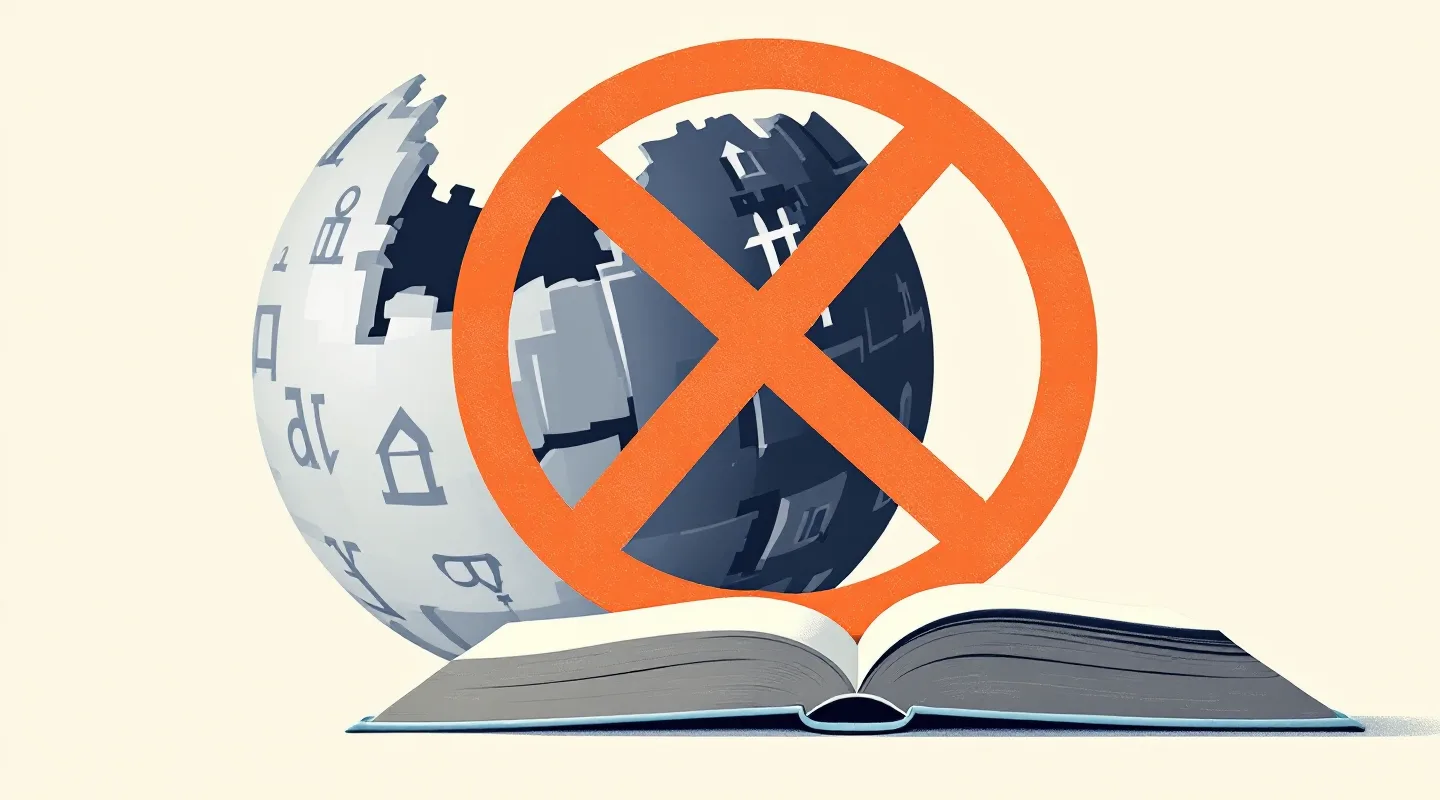
Unless your professor has specifically instructed you to reference it, Wikipedia should not appear in the bibliography of an academic research paper. This is not an arbitrary rule, and it is worth understanding the genuine reason behind it rather than treating it as an obstacle. Wikipedia is built through "crowdsourcing"—meaning that, in principle, any person with an internet connection can create or edit its articles. While the Wikipedia community does enforce policies and volunteers do review edits, the platform is not subject to the formal scrutiny of subject-matter academics in the way that peer-reviewed journals are, nor is it subject to the professional editorial standards of major newspapers.
That said, Wikipedia can be a genuinely useful tool at the very beginning of your research process. A well-maintained Wikipedia article on a complex topic can give you a broad orientation—key concepts, major figures, historical timeline—and, crucially, its reference section often links to legitimate primary sources and peer-reviewed articles. Use Wikipedia to get your bearings and to generate search terms, then follow its citations into the academic databases where you will find sources you can actually cite. Think of Wikipedia as the lobby of a library, not as a shelf you cite from.
Wikipedia is a useful starting point for orientation and generating search terms, but it is not citable in academic work. Use its references section to find legitimate sources, then chase those down in a database.
06Putting It All Together: A Quick Evaluation Checklist
When you find a potential source and want to quickly determine whether it is peer-reviewed, run through this checklist before adding it to your notes. Each "yes" answer increases confidence; a cluster of "no" answers should send you looking for a better source.
- Did I find this through an academic database with the peer-review filter applied? If yes, you have the strongest possible assurance.
- Is the article published in a journal with a volume and issue number? Numbered journal publication indicates scholarly infrastructure.
- Does the article list authors with academic credentials and institutional affiliations? Accountability to an institution is a marker of scholarly publishing.
- Does the article open with an abstract? Standard in peer-reviewed work; its absence is a warning sign.
- Does the article cite other scholarly work and include a formal reference list? Engagement with existing literature is foundational to peer review.
- Is the article an original research piece rather than an editorial or letter to the editor? Even in peer-reviewed journals, not every piece type goes through review.
- Can I locate the journal's peer-review policy on its official website? Reputable journals describe their review process openly.
If you can check off the majority of these items for a given source, you can cite it with confidence. If several items are missing, invest a few extra minutes to verify—or find a different source that passes the checklist cleanly. The effort is worth it: a well-sourced research paper not only earns a better grade but also develops the critical research skills that will serve you throughout your academic and professional life.