01The Modern Cliff Notes Problem
You may have noticed that many professors loathe Wikipedia and strictly oppose students using it as a resource for academic writing. They may reject papers outright or lower grades when Wikipedia appears on a Works Cited page — and students often have genuine difficulty understanding why. After all, type almost any academic search term into Google and the first result you encounter is usually a Wikipedia article. It is also the place millions of people turn to daily for everything from celebrity gossip to quick dictionary definitions. So what, exactly, is the big deal?
Think of Wikipedia as the electronic Cliff Notes of the modern era. (Ask your parents if you are not sure what Cliff Notes are — they were the go-to homework shortcut long before Google existed.) The days of students laboring away in the library with stacks of dusty books or zipping through microfiche files have been largely replaced by late-night research sessions in front of a keyboard and monitor. Professors understand this reality. They know students will turn to the web for research. But they also know that not everything available online is a credible source — and Wikipedia is a prime example of why that distinction matters so much in academic work.
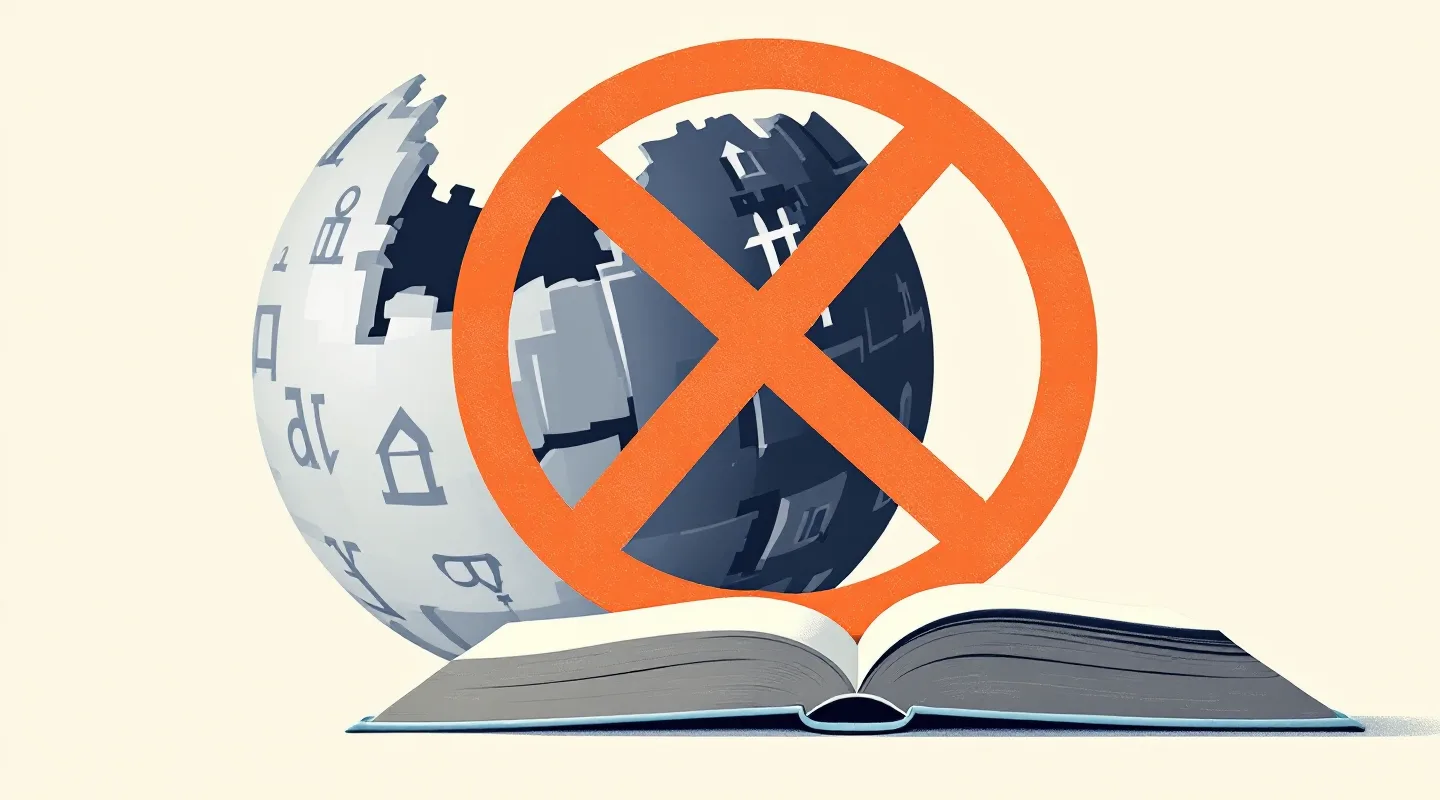
Wikipedia is the starting point for millions of searches — but its open-editing model means it cannot be trusted as a standalone academic source, no matter how polished an entry looks.
02How Wikipedia Actually Works — and Why That's a Problem
To understand why professors reject Wikipedia, it helps to understand exactly what it is: a crowd-sourced, collectively authored encyclopedia. That means virtually anyone with an internet connection can log in and add, edit, or delete information on almost any topic. Some contributors are genuine subject-matter experts writing carefully and in good faith. Others are hobbyists, students, or people with strong personal opinions who may not fact-check their additions at all. The result is a patchwork of entries where accurate, peer-reviewed information sits side by side with errors, oversimplifications, and occasionally deliberate distortions — and a casual reader has no reliable way to tell the difference.
1The Bias Problem
The crowd-sourcing model creates a particularly serious bias risk. Consider a company that creates and maintains its own Wikipedia page. There is nothing structurally preventing that company from presenting its history, products, or legal record in the most flattering possible light, quietly removing unflattering facts, or framing controversies in ways that serve its interests. The same dynamic applies to politically charged topics. When researching controversial issues — abortion, immigration policy, Middle East politics, climate legislation — a single motivated editor can revise an entry to make a strongly opinionated viewpoint appear to be established consensus. The entry may read confidently and cite sources, yet still be misleading in its framing or selective in what it chooses to include.
2The Instability Problem
Unlike a textbook or a peer-reviewed journal article, Wikipedia entries are constantly changing. The version of an article you read today may look substantially different from the version that existed when you started your research last week, or the version a classmate read last semester. This instability means that even if the information was accurate at the moment you accessed it, there is no guarantee it will remain so — and there is no editorial board standing watch to catch errors as they are introduced. For academic work, where verifiability and consistency matter, this is a fundamental flaw.
3No Guaranteed System of Checks
Peer-reviewed academic journals require authors to submit their work to evaluation by independent experts in the field before publication. That process is slow and sometimes imperfect, but it exists specifically to catch factual errors, methodological flaws, and unsupported claims. Wikipedia has no equivalent mechanism. While some well-maintained entries are voluntarily monitored by knowledgeable editors, that oversight is inconsistent across topics. A Wikipedia article on an obscure historical event or a niche scientific concept may have gone months or years without any meaningful review. There is simply no system of checks in place to ensure the accuracy of information across the platform as a whole.
03What Wikipedia Is Actually Good For
None of this means Wikipedia is worthless. It can be a genuinely useful tool when you understand what it is and are not treating it as a finished source. Think of it as a doorway into a topic, not the room itself.
1Getting Your Bearings on an Unfamiliar Topic
If your professor assigns a paper on the Marshall Plan and you have only a vague sense of what it was, a Wikipedia article can give you a fast, readable orientation: the key dates, the major figures involved, the broad historical context. That orientation helps you ask better questions when you move into legitimate sources. The mistake is stopping there and treating the Wikipedia summary as a citable account of the topic.
2Mining the References Section
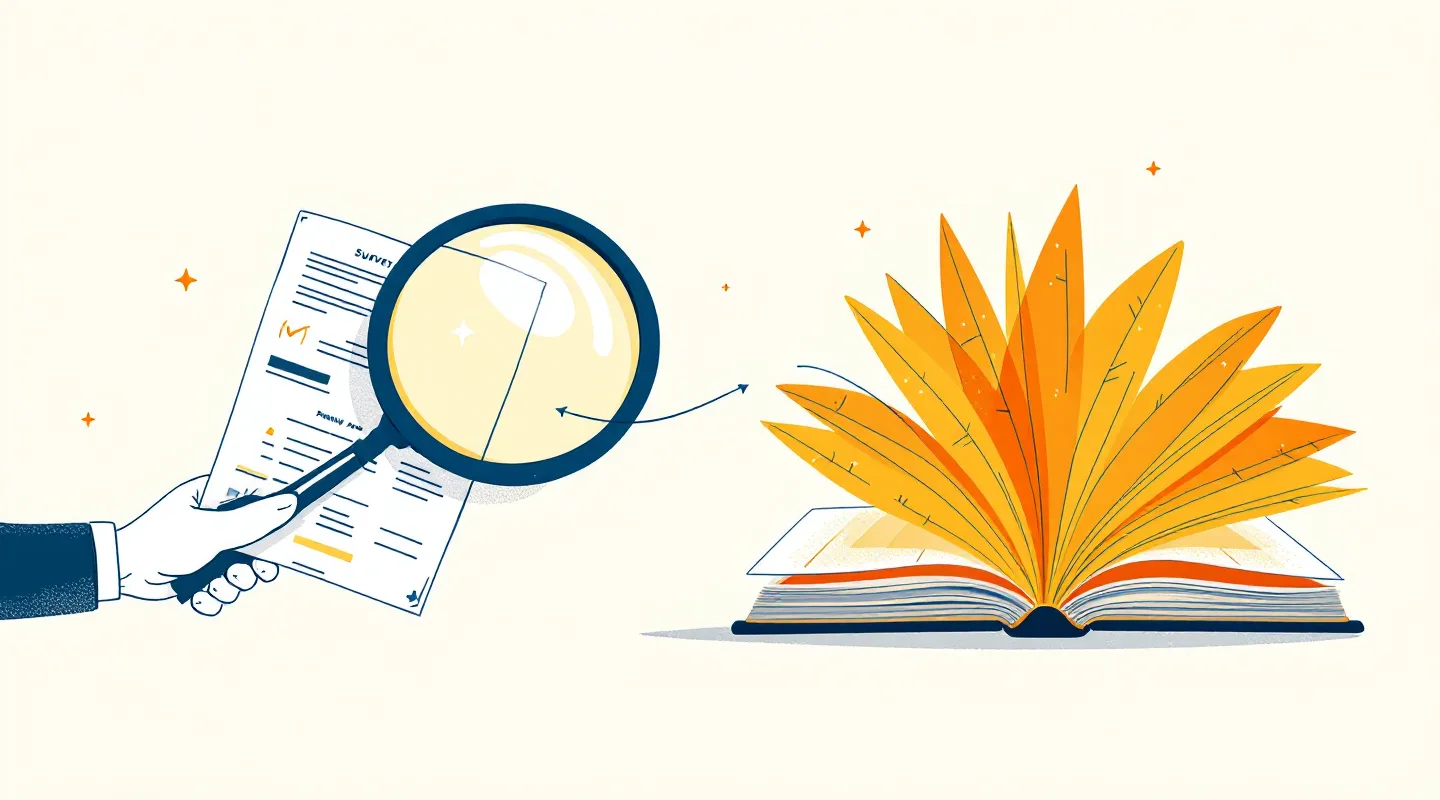
This is the single most academically useful thing Wikipedia can do for you, and it is underused by most students. More carefully maintained Wikipedia entries include a list of references and external links at the bottom of the page — the sources that contributors actually used when writing the entry. Those sources may include peer-reviewed journal articles, government reports, published books, and reputable news archives. Rather than citing the Wikipedia article, you can follow those citations back to their origin, read the primary or secondary source directly, and cite that instead. You have essentially used Wikipedia as a free bibliography generator while avoiding its credibility problems entirely.
Fig. 1 — Search your topic on Wikipedia → Scroll to the "References" or "Further Reading" section → Locate journal articles, books, or reports listed there and access those original sources through your library database. Cite the originals, not the Wikipedia entry.
3Cross-Checking Basic Facts
If you need to quickly verify a non-controversial fact — the year a well-known novel was published, the capital of a country, the full name of a well-established organization — Wikipedia is generally reliable for that narrow purpose, because such facts are easy to confirm and errors are usually corrected quickly. The risk rises dramatically when you move into contested, interpretive, or politically sensitive territory.
Use Wikipedia's references section as a free research roadmap. Find the credible sources listed there, access them directly, and cite those — not the Wikipedia article itself.
04What to Use Instead
The good news is that credible alternatives to Wikipedia are widely available, and many of them are free or accessible through your school's library. Making the switch from Wikipedia to legitimate sources is largely a matter of knowing where to look and building a small set of reliable habits.
1Academic Databases
Your college or university library almost certainly provides free student access to databases such as JSTOR, EBSCOhost, ProQuest, Google Scholar, and PubMed (for health and life sciences topics). These platforms index peer-reviewed journal articles, conference papers, dissertations, and scholarly books — exactly the kinds of sources professors expect to see on a Works Cited page. If you are unsure how to navigate them, most academic libraries offer short tutorials or reference librarians who will help you run a search.
2Primary Sources
For history, political science, law, and similar disciplines, primary sources — original documents, speeches, legislation, court decisions, census data — are the gold standard. Many are freely available through government websites, university digital archives, or the Library of Congress. Citing a primary source rather than a secondary summary demonstrates a level of research depth that professors notice and reward.
3Reputable Reference Works and Encyclopedias
Subject-specific encyclopedias — such as the Oxford Dictionary of National Biography, the Encyclopedia of Philosophy, or Britannica Academic — are edited by credentialed scholars and go through formal review processes. They are not peer-reviewed in the same rigorous sense as journal articles, but they are a significant step above Wikipedia in reliability and are generally acceptable as a supplementary source.
4Quality News and Institutional Sources
For current events or policy topics, established newspapers of record and nonpartisan institutional reports (from bodies such as the Pew Research Center, the Congressional Research Service, or the World Health Organization) can serve as credible sources. The key is to evaluate the outlet's editorial standards and to avoid mistaking opinion pieces for factual reporting.
05The Bottom Line for Academic Writers
In academic settings, Wikipedia is considered an unreliable source — and that judgment is not arbitrary or outdated. It follows directly from how Wikipedia is built: open to contributions from anyone, constantly changing, vulnerable to bias, and lacking the editorial oversight that distinguishes scholarly publishing. Professional academic writers do not use Wikipedia as a source in their work for exactly these reasons. The platform is too unstable and too unverified to meet the evidentiary standards that academic writing demands.
That does not mean you need to pretend Wikipedia does not exist. Use it to orient yourself on unfamiliar topics. Use it to find leads that point you toward real sources. But when you sit down to build your Works Cited page, make sure every entry traces back to a source with genuine credibility — an author with expertise, a publisher with editorial standards, and a record that can be independently verified. Your grade, and more importantly your intellectual honesty, depends on that distinction.
Wikipedia is a research doorway, not a destination. Orient yourself there, then move into peer-reviewed journals, primary sources, and subject-specific databases before you start writing.