Winter break has a way of making the couch feel permanent. One day you are sleeping in, eating home-cooked meals, and ignoring every notification from your student portal — and the next, your roommate is texting you about move-in logistics and your inbox is full of syllabi. The transition back to college life for the spring semester is abrupt, and students who treat preparation as an afterthought almost always pay for it by week three. The good news is that a little deliberate effort in the days before classes begin pays enormous dividends for the entire semester ahead.
01Prepare Your Mind Before You Unpack Your Bags
Mental preparation is the most overlooked part of returning to college, yet it shapes everything that follows. After a month of lower stakes and looser schedules, your brain needs a warm-up before it can operate at academic intensity again.
1Acknowledge the adjustment period — and plan for it
Every student faces a recalibration window when returning from a long break. You will encounter a new course schedule, professors you have never met, classmates you may not know, and rhythms that feel unfamiliar all at once. Recognizing that this adjustment is normal — rather than a sign something is wrong — keeps anxiety in check. Give yourself roughly two to three weeks to genuinely settle in before you feel fully up to speed. That window is real, so do not schedule your most ambitious study sessions on day one and then spiral when they do not go perfectly.
2Reset your sleep schedule before classes start
Late nights at home drift later when there is nothing pulling you out of bed. If classes begin on a Monday and you are still sleeping until noon on the previous Thursday, you are setting yourself up for a brutal first week. Start shifting your bedtime and wake time toward your school schedule at least four or five days before the semester opens. This is not about discipline for its own sake — it is about ensuring your brain is actually functional during 8 a.m. lectures.
3Set an honest intention for the semester
This is different from vague optimism like "I'll do better this semester." Sit down and identify one or two specific habits from last semester that hurt your grades — maybe you waited too long to start research papers, or you skipped too many Tuesday morning classes after late Monday nights. Write those habits down and write one concrete substitute behavior for each. Specific intentions are far more actionable than general ones.
Mental preparation starts before you set foot on campus. Adjusting your sleep schedule and identifying last semester's pitfalls gives you a running start on day one.
02Review Your Classes and Identify Challenges Early
Preparation means far more than buying new school supplies and stacking textbooks on your desk. Before the semester starts, look carefully at your class schedule and ask yourself where the genuine difficulty will come from.
1Read every syllabus on day one
Professors post syllabi — and many share them before the semester even begins — precisely so students can plan ahead. Read each one from start to finish. Note the weight of every assignment, the due dates for major papers and exams, and any attendance policies that could affect your grade. A student who is surprised by a 20-page research paper in week ten did not read the syllabus carefully in week one. That paper was always there; the only variable was awareness.
2Flag your hardest assignments immediately
If you struggle with long research papers and one of your required courses demands one, start looking for sources of assistance now — before you feel overwhelmed. This might mean visiting your university's writing center to schedule an early appointment, identifying relevant databases for your topic, or simply breaking the assignment into smaller milestone goals on your calendar. Starting the search for help in week one, when you are calm and have time, is infinitely better than starting it in week eight at midnight.
3Plan around back-to-back class days
If your schedule has a day where you are in class from 9 a.m. straight through to 3 p.m., that mental fatigue is real and worth planning for. Bring a snack so you are not running on empty during your lunchtime lecture. Identify a quiet spot on campus where you can decompress for ten minutes between sessions. These small logistical decisions protect your concentration in ways that matter by the end of a long day.
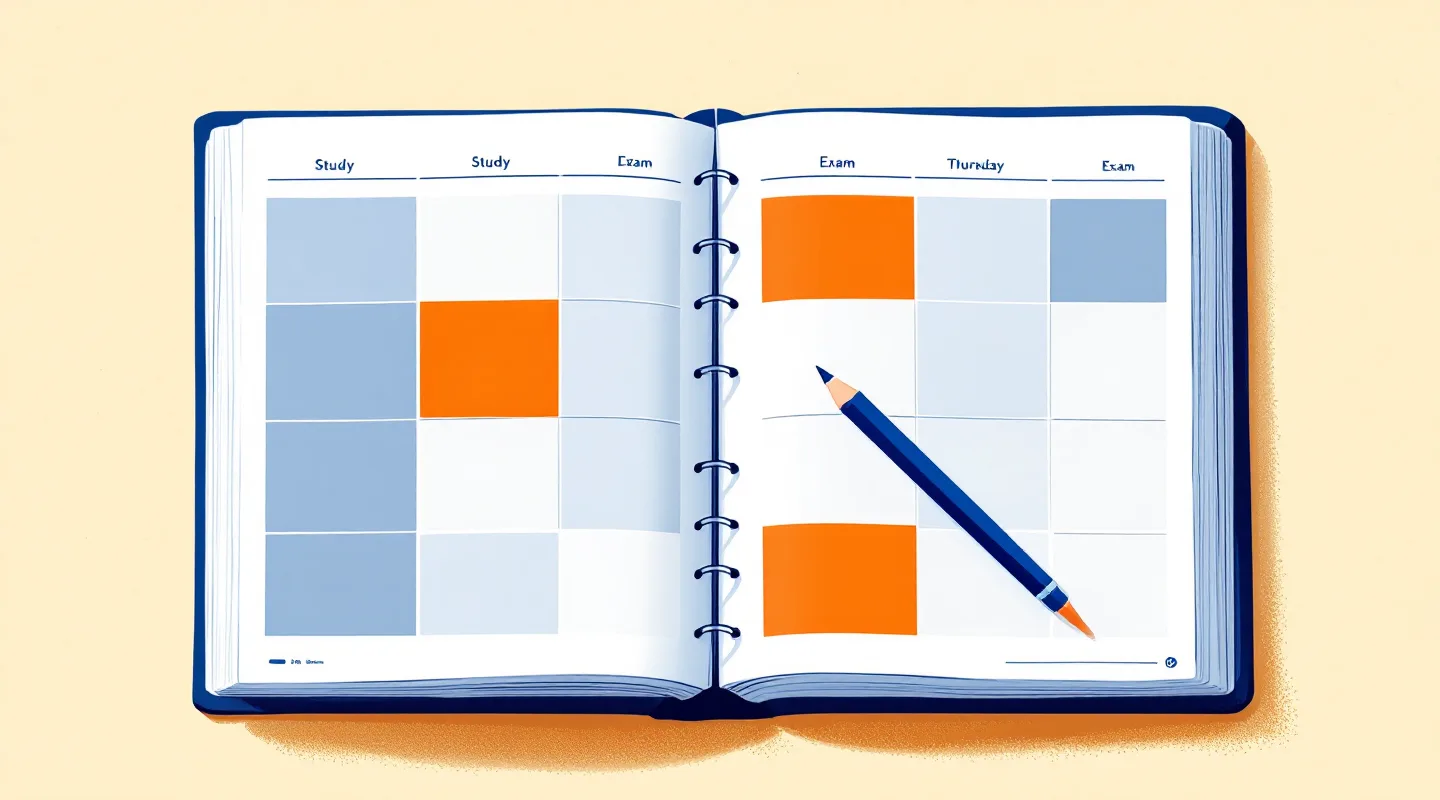
Fig. 1 — A student reviewing three syllabi highlights: a 15-page history paper due week 10, a statistics midterm in week 6, and back-to-back Tuesday classes. She books a writing-center appointment for week 3, schedules a study-group kickoff for statistics, and packs a lunch on Tuesdays. Total time invested: 45 minutes. Stress avoided: significant.
03Build a Master Calendar Before Week One
One of the single highest-return actions you can take before the semester begins is creating a unified calendar that captures every class time, every major deadline, and every significant outside commitment — work shifts, family obligations, recurring appointments — in one place.
The reason this works is simple: conflicts and crunch points that are invisible in your head become obvious on paper. When you can see that your biggest essay is due the same week as your heaviest work schedule and a family event, you can start working on that essay two weeks earlier instead of discovering the collision at 11 p.m. the night before it is due. Use whatever calendar system you will actually maintain — a paper planner, a phone calendar, a spreadsheet — but use something, and keep it updated as the semester evolves.
1Add milestones, not just deadlines
Deadlines tell you when something is due. Milestones tell you when something needs to be started. For a ten-page research paper due in week nine, your calendar might include: topic confirmed by week two, sources gathered by week four, outline drafted by week six, first draft complete by week eight. Breaking large assignments into smaller calendar events transforms a looming, vague threat into a sequence of manageable tasks.
2Coordinate with outside commitments honestly
Many college students work part-time jobs, have caregiving responsibilities, or commute long distances. These are not inconveniences to hide from your schedule — they are real constraints that your academic plan needs to account for. A student who works Friday and Saturday nights should not be scheduling her heaviest study sessions for Saturday afternoon and then wondering why she is exhausted. Build your study blocks around your real life, not an idealized version of it.
A master calendar with milestones — not just due dates — turns overwhelming semester-long assignments into a series of achievable weekly steps.
04Master the Art of Prioritization
Returning students often underestimate how quickly the pace of a semester accelerates. The first two weeks may feel relaxed — professors are still distributing syllabi, early readings are light, and social life is vibrant. But weeks three through six tend to arrive like a freight train, with exams, term papers, and essays all competing for attention simultaneously.
1Learn to say no to the right things
This does not mean becoming a hermit. College social life has genuine value — relationships, networks, and the experience of being young and surrounded by interesting people are real goods. But there is a difference between attending the occasional party on a Friday night and going out every Tuesday because "nothing is due yet." The academic cost of lost weeknight sleep and missed reading accumulates slowly and then hits all at once. Part of being a successful college student is knowing when a particular night at the bar is actually worth its cost in the next day's productivity.
2Identify your peak focus hours
Some students think most clearly in the early morning; others hit their stride at 10 p.m. Neither is inherently better — what matters is knowing which is true for you and protecting those hours for your most cognitively demanding work. Routine reading and administrative tasks can fill the rest. Scheduling a difficult writing session during the hours when you are naturally at your sharpest makes the same task feel significantly easier.
3Keep stress in check during crunch time
When workload peaks, it can genuinely feel as though completing everything in the time available is impossible. That feeling is rarely accurate. Almost every overwhelming semester moment looks more manageable when broken into a list of discrete tasks and tackled one at a time. The ability to stay functional under moderate pressure — rather than freezing or catastrophizing — is one of the most practically valuable skills a college student can develop. Regular exercise, adequate sleep, and short breaks between study sessions all help maintain that capacity.
Prioritization is not about doing everything — it is about protecting your most important work from being crowded out by less important demands on your time.
05Seek Out Help Before You Feel Overwhelmed
One of the most consistent differences between students who thrive and students who struggle is not raw intelligence — it is willingness to seek help proactively rather than reactively. Students who wait until they are desperate to ask for assistance have already lost weeks of potential support. Students who identify resources early, visit them before they feel urgent, and return regularly have a genuine structural advantage.
1Know what your campus offers
Most universities provide writing centers, tutoring labs, academic advisers, and mental health counseling — often at no additional cost. Many students never use these resources because they associate them with failure or crisis, when in reality the students who use them most are often the most motivated and academically engaged. A writing center visit to talk through your research paper argument in week three is not a sign of weakness; it is a strategic use of a free resource that can improve your final grade.
2Use example essays and study tools to understand expectations
One underrated form of academic preparation is reading strong examples of the kind of work you are expected to produce. If you have never written a proper literature review, reading several examples before your professor asks for one gives you a mental model of the target. Example essays, term papers, outlines, and study guides help you understand what quality looks like in your specific discipline — which makes producing quality work significantly more straightforward.
3Don't wait for a crisis to ask a question
If a lecture confuses you, visit office hours that week — not the week before the exam. If an assignment prompt seems ambiguous, email your professor within 48 hours of receiving it — not the night before it is due. Academic momentum compounds in both directions: students who stay current with their confusion tend to stay engaged and confident, while students who let confusion accumulate find that each new concept rests on a shakier foundation than the last.
06Keep the Bigger Picture in View
The spring semester has a natural arc that is worth keeping in mind whenever the mid-semester grind starts to feel endless. Spring break typically arrives somewhere around the two-month mark — a genuine reset that most students can use for rest, catch-up, or both. The semester itself concludes in May, which means the entire academic gauntlet from first day to final exam is roughly four to five months long.
That is a finite, manageable window. The work is real, the pressure is real, and the decisions you make in these months genuinely matter for your academic record and your future opportunities. But so is the fact that students who enter the semester with a plan, seek help when they need it, and maintain reasonable self-discipline consistently reach May in far better shape than they feared back in January. Think positive, stay organized, and remember that every overwhelming week eventually becomes a week you got through.
The spring semester is a defined, finite challenge. Students who plan early, seek help proactively, and manage their energy — not just their time — reach the finish line stronger than they started.