No student likes finals. They always seem to arrive at the worst possible moment — colliding with holiday travel plans, part-time work schedules, and the general exhaustion that accumulates over a long semester. The stress of juggling multiple tests, take-home exams, and papers due in rapid succession can feel genuinely insurmountable if you haven't laid any groundwork. The good news is that finals stress is largely a planning problem, which means it is also largely a planning solution. The strategies below won't make finals stress-free — that would be an overstatement — but they will make the experience meaningfully less stressful, and that is a goal well within your reach.
01Build a Game Plan Before the Chaos Starts
The single most effective thing you can do for your finals season is to create a written schedule before it begins. "Before it begins" is doing a lot of work in that sentence — ideally you are mapping things out at least two weeks in advance, not the Sunday night before your first exam.
1Audit Every Deadline at Once
Sit down with a blank calendar — paper or digital, whichever you will actually use — and enter every single deliverable for finals week: exams, take-home tests, final papers, lab reports, oral presentations. Write down not just the due date but also the anticipated difficulty and the format. A closed-book in-person exam for a course you have been struggling in all semester is a very different beast from an open-note take-home in a subject that comes naturally to you.
Once everything is visible on one page, patterns emerge immediately. Maybe you have two exams on the same Tuesday and a ten-page paper due that Wednesday. Seeing that cluster two weeks out gives you time to redistribute your studying. Seeing it Monday night of finals week gives you nothing but anxiety.
2Space Out Your Studying Accordingly
If you know multiple exams or papers land on the same day, work backwards from that date and assign specific study blocks to specific subjects. For example, if you have a biology final and a history essay both due on December 14th, you might devote mornings of the preceding week to biology review and afternoons to drafting and revising your history paper. This kind of deliberate compartmentalization prevents the paralysis that comes from staring at a pile of obligations and not knowing where to start.
A useful rule of thumb: always begin a study block by writing down the one concrete thing you want to accomplish before you stop — a specific chapter, a specific set of practice problems, a specific essay section. Vague intentions like "study bio" produce vague results. Specific intentions like "complete practice problems for chapters 8 through 11" produce checkboxes you can actually tick.
Map every deadline onto one calendar at least two weeks out. Visible clustering is the first step toward fixing it.
02Find a Relaxing and Quiet Place to Study
Your study environment matters far more than most students give it credit for. Noise, interruptions, and visual clutter all compete for cognitive bandwidth that you need for learning and retention. Finding the right space is especially critical for take-home exams, which must typically be completed within a tight time window — often three to eight hours — but outside the controlled setting of a classroom. A noisy common room or a bedroom full of distractions can genuinely cost you points on a timed take-home in ways that would never happen in a quiet exam hall.
1Scout Your Options Early
Library study rooms at most universities can be reserved in advance, and they fill up fast during finals season. Log into the reservation system the moment finals schedules are released and book your slots. If your campus library is too crowded or too social (this happens — people treat it like a cafeteria during finals), consider alternatives: a municipal public library, a quiet coffee shop during off-peak hours, a 24-hour study lounge if your school has one, or even a rarely-used department building that stays unlocked late.
2Minimize Digital Interruptions
A quiet physical space loses half its value if your phone is lighting up every three minutes. During dedicated study blocks, put your phone on Do Not Disturb, use a browser extension to block social media, and close every tab that is not directly related to what you are working on. The goal is to eliminate the friction cost of re-entering a focused state — every time you are pulled out of concentration by a notification, it takes meaningful effort to return to the same depth of focus.
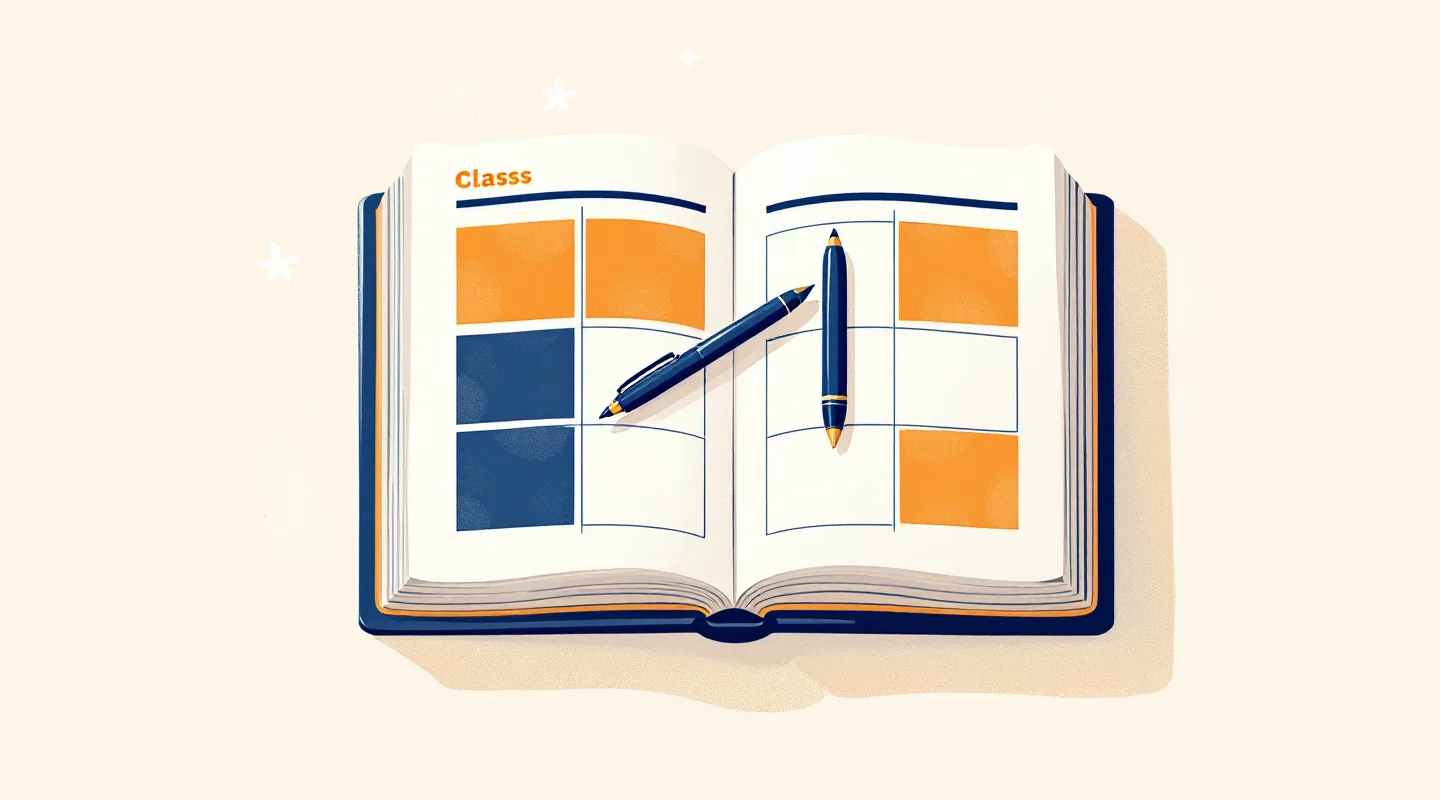
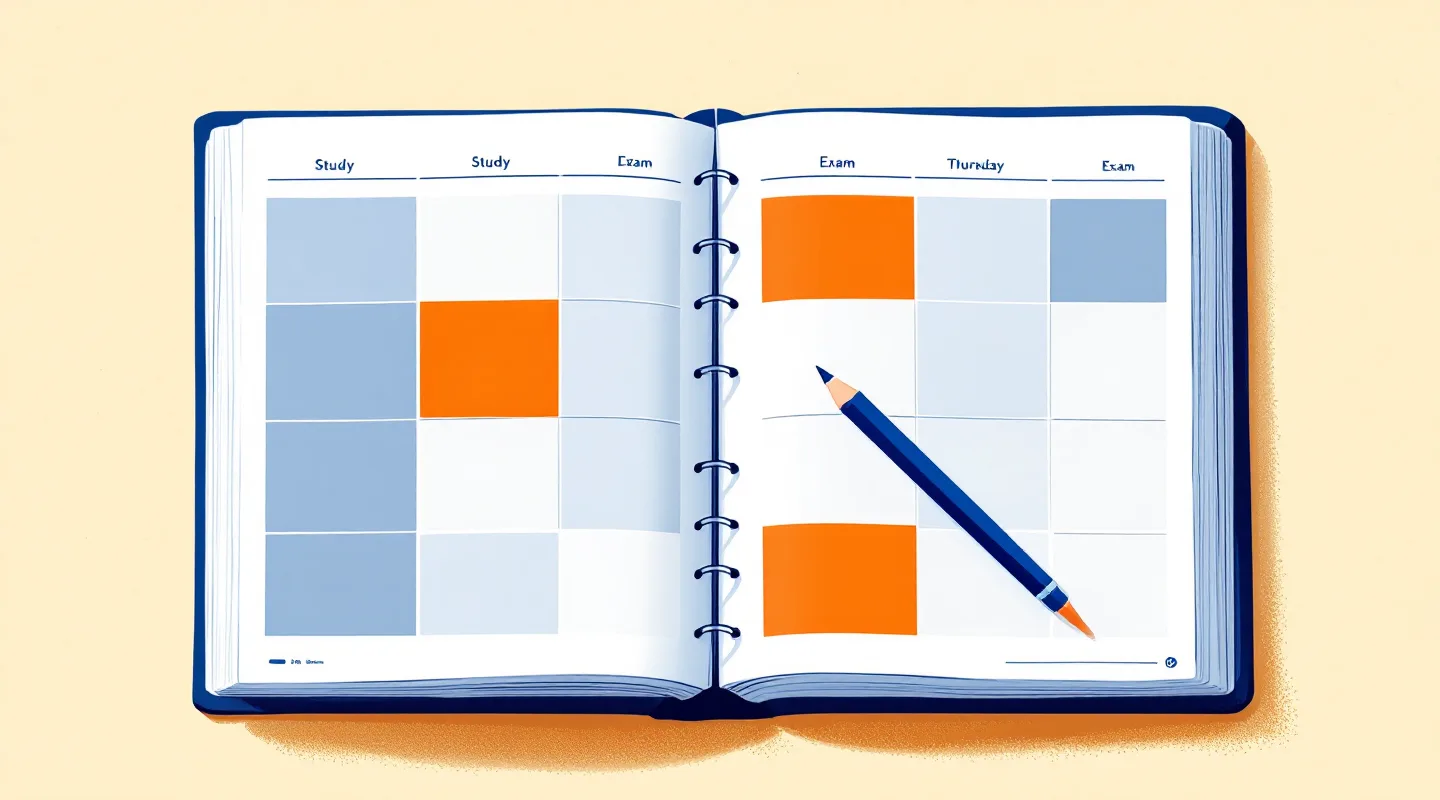
Fig. 1 — A student with three finals and one paper maps Mon–Fri into color-coded blocks: mornings for the hardest subject, afternoons for writing, evenings for light review of the easiest course. Weekends before finals week are reserved for drafts and practice exams — not catching up on Netflix.
03Shelve Your Other Obligations (and Communicate About It)
Finals season often collides with the holiday period, which layers social pressure on top of academic pressure in a uniquely uncomfortable way. Friend groups want to do seasonal activities. Family members expect visits or at least phone calls. Workplace schedules may intensify. All of this can make students feel guilty for choosing to study — and that guilt is genuinely counterproductive.
1Have the Conversation Before You Disappear
The most effective approach is to communicate proactively, before finals begin, with the people who will be affected by your reduced availability. Tell your friends and family that you are going into a focused study period, give them a rough end date, and suggest something to look forward to afterward. "I'm pretty unavailable from the 10th to the 18th, but let's plan something for the 19th" is much easier for people to accept than going silent without explanation and then apologizing after the fact.
Most people in your life will respect a clearly communicated boundary. The ones who pressure you anyway are revealing something about their own priorities, not yours. Your grades and your stress levels are real; the social obligation to attend every holiday gathering is not.
2Build In Small Social Releases
Completely isolating yourself for two weeks is neither sustainable nor necessary. A short coffee with a friend, a thirty-minute walk, a brief phone call — these small releases of social energy can actually improve your focus when you return to studying, because you are not sitting on the accumulated tension of total withdrawal. Schedule these deliberately, keep them time-bounded, and treat them as rewards for hitting your study targets.
Proactive communication about your availability is not antisocial — it's respectful. Say it early, say it clearly, and offer a concrete plan for after finals.
04Be Realistic About How Much Time Each Subject Actually Needs
One of the most common and most damaging mistakes students make during finals is distributing their study time based on how they feel about a subject rather than how much the subject actually demands. Doing well in a class all semester — attending lectures, keeping up with readings, participating in discussion — earns you a head start, not a free pass. Underinvesting in a difficult course because you are "pretty sure you'll be fine" is a reliable path to disappointment.
1Acknowledge Your Strengths and Weaknesses Honestly
Every student has certain subjects where material clicks quickly and others where it requires multiple passes to sink in. The danger is assuming the former experience will generalize. Just because organic chemistry came naturally to you does not mean econometrics will. Just because you sailed through the first half of a literature course does not mean the final essay — which may ask you to synthesize the entire semester — will write itself.
Before you assign study hours to each subject, do a quick honest audit. Ask yourself: What is my current grade in this course? How has the exam or assignment format historically challenged me? What is the weight of this final on my overall grade? A final exam worth 40% of your grade in a course where you are borderline deserves dramatically more preparation time than an optional extra-credit paper in a course you are acing.
2Use Practice Tests and Past Papers as Diagnostic Tools
One of the best ways to calibrate how much time you actually need is to sit down and attempt a practice exam or a past paper under realistic conditions — timed, without your notes open unless the real exam is open-note. The result tells you far more about your readiness than a vague sense of familiarity with the material. If you score well and move quickly, you may genuinely need less time on that subject. If you blank on questions you thought you knew, you have found your gap with time left to address it.
Allocate study hours based on evidence — current grade, exam weight, past performance — not on how comfortable a subject feels.
05Don't Wait Until "Hell Week" to Ask for Help
Perhaps the most important piece of advice in this entire guide is also the simplest: start early and reach out for support before you are drowning. Finals week itself — sometimes grimly nicknamed "hell week" on campuses — is the worst time to realize you do not understand the material, that your paper has no real argument, or that you have left yourself twelve hours to write something that needed thirty.
Academic support resources — writing centers, tutoring labs, professor office hours, and online tools for structuring and drafting written assignments — are designed precisely for the stretch before finals, not during them. Writing centers tend to be overbooked in the final days of the semester. Professors are harder to reach once grading begins. The students who get the most value from these resources are the ones who show up two weeks early, with a draft or a set of questions in hand, rather than the night before with a blank page and rising panic.
Assistance is available for all subjects and for all types of written assignments — the key is treating that assistance as part of your game plan, not a last resort. Build office-hours visits, writing-center appointments, and study-group sessions into your calendar the same way you build in your study blocks. They are not extras; they are infrastructure.
Every support resource — writing centers, tutoring, online tools — is more effective two weeks before finals than two hours before the deadline. Book early.