I.Introduction
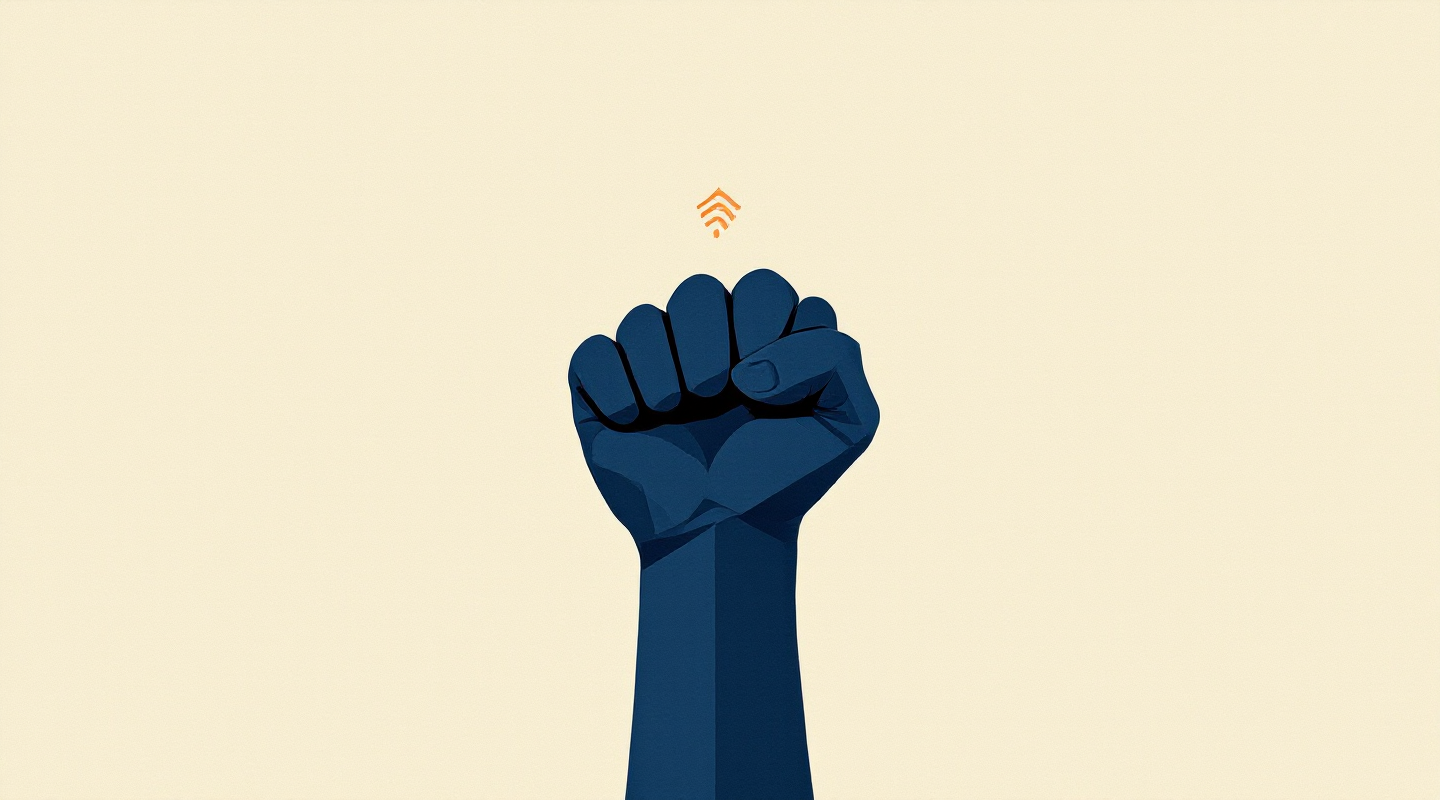
In 1968, Tommie Smith and John Carlos stepped onto the medal podium at the Mexico City Olympics — Smith with gold, Carlos with bronze — and, as the Star-Spangled Banner began to play, raised a black-gloved fist into the air. That gesture lasted roughly thirty seconds. Its consequences lasted years: both men were expelled from the Olympic Village and returned home to death threats and damaged careers. Nearly fifty years later, San Francisco 49ers quarterback Colin Kaepernick sat, then knelt, during the national anthem before NFL games, setting off a controversy that dominated American public life throughout 2016 and 2017. The fury directed at Kaepernick — from fans, commentators, and ultimately the President of the United States — succeeded largely in drowning out the message he was trying to send: that police brutality against Black Americans is a crisis the country refuses to face honestly.
Kaepernick's kneeling is not an act of disrespect toward the nation or its military; it is a supremely patriotic act — a demand that America live up to the ideals its anthem claims to celebrate.A1 Understanding why requires situating the protest in its proper historical context, examining the conditions that made it necessary, and reckoning honestly with the backlash it provoked.
II.The History of Sports and Protest
Smith and Carlos were not anomalies. Because of the intimate connection between race, power, and celebrity in American sports, athletes have long used their visibility to protest racial injustice — often at significant personal cost. Muhammad Ali is perhaps the most celebrated example. Ali refused induction into the U.S. Army in 1967 on grounds of conscience and his opposition to the Vietnam War. The decision cost him his heavyweight title, more than three years of his prime athletic career, and, briefly, his freedom. As Link (2017) notes, Ali's stand "aroused the hate of much of the nation and shaved years off his career." Ali placed his political convictions above his livelihood — and Kaepernick, in choosing protest over a lucrative NFL career, made precisely the same calculation.A2
More recent examples confirm that athlete activism is a continuous tradition rather than a series of isolated incidents. In 2012, LeBron James and his Miami Heat teammates photographed themselves in black hoodies to protest the killing of Trayvon Martin and the inadequate legal response to it. In 2014, players across multiple sports wore "I Can't Breathe" shirts in response to the death of Eric Garner. These gestures attracted criticism in their moment but are now regarded, even by many initial detractors, as appropriate expressions of conscience. "Sport has always been a canvas used to challenge convention, prove the worthiness of a marginalized group, and prod the nation to live up to its stated ideals," write Lonnie Bunch and David Skorton (2017) — and that function is not incidental to sports but woven into their cultural role.A3 The athlete commands a mass audience that no op-ed or street demonstration can guarantee; the political activist who also happens to be a sports celebrity has an extraordinary platform, and history suggests that some have used it extraordinarily well.
III.The Context: Police Brutality and Black Lives Matter
Kaepernick did not kneel impulsively. His protest grew directly out of a documented, ongoing crisis. The killing of Trayvon Martin in 2012, followed by the acquittal of his shooter, galvanized activists and gave rise to the Black Lives Matter movement, organized in large part through social media. Over the following years, a succession of high-profile deaths — Michael Brown in Ferguson, Eric Garner in New York, Tamir Rice in Cleveland, Walter Scott in South Carolina — kept the issue in public view. Many more cases never reached the mainstream media at all. What changed in this period was partly technological: the proliferation of body cameras and smartphone video made it harder to dismiss individual incidents as anomalies or misunderstandings. The cumulative footage provided a visual record that corroborated what Black communities had been reporting for decades.
Black Lives Matter responded to this record with peaceful protests, marches, and direct action. The response, in much of the media and among many politicians, was hostility — the same hostility that met earlier civil rights protesters. The parallel is instructive. Martin Luther King was jailed, surveilled by the FBI, and denounced in the national press as a troublemaker for demanding that racial equality be achieved at a pace faster than "never." When we speak of "patriotism" in this context, it is worth being precise: patriotism is not deference to national symbols, but active commitment to the principles those symbols are supposed to represent — justice, equality, and the dignity of all citizens.A4 By that definition, King was a patriot; so are the members of Black Lives Matter; and so is Colin Kaepernick. It was in this climate — one of documented injustice and frustrated peaceful protest — that Kaepernick decided to act.
Read the full annotated essay.
Read the remaining sections, full references, and all 8 editor annotations — plus the full library of annotated tutorials.
Sign Up NowIV.Effects of the Protest
Kaepernick's gesture spread rapidly. By the 2016 season's end, dozens of NFL players were taking a knee or raising a fist during the anthem, and the protest had spilled into college and high school sports. The #TakeAKnee hashtag became one of the defining cultural phenomena of 2017. The movement demonstrated that a single, silent act of dissent, performed consistently and in public, could sustain national conversation about police accountability far longer than a single news cycle. Kaepernick also donated approximately one million dollars to community organizations focused on racial justice — a personal financial commitment that undercuts any claim that his protest was merely performative (Rosenberg, 2017).
Critics argued that kneeling during the anthem was an attack on the military and an expression of hatred for America — but this reading collapses a distinction that the First Amendment exists precisely to protect: the difference between criticizing a nation's conduct and rejecting the nation itself.A5 Kaepernick was explicit from the beginning that his protest targeted police violence, not veterans or the flag. Many veterans and active military personnel said publicly that they understood his protest as an exercise of the very freedoms they served to defend. The anger directed at Kaepernick, in other words, often rested on a misreading of his message — a misreading that was, in some cases, willful.
The costs to Kaepernick personally were real and severe. After the 2016 season, he was not signed by any NFL team, despite being, as Schoeller (2017) documents, among the most talented quarterbacks available. NFL Commissioner Roger Goodell later faced scrutiny over whether team owners had colluded to keep Kaepernick out of the league — a process that, if true, would represent institutional retaliation for protected speech. That Kaepernick donated roughly one million dollars to racial-justice organizations while simultaneously forfeiting millions in potential NFL salary demonstrates a level of material sacrifice that distinguishes principled activism from symbolic gesture (Rosenberg, 2017).A6 In November 2017, Sports Illustrated recognized this by naming him the recipient of the Muhammad Ali Legacy Award — an acknowledgment, from within the sports establishment itself, that his protest belonged in the tradition of athlete activism the award was created to honor.
None of this means the protest was without complications. The NFL's commercial relationships suffered; sponsors pulled back; some fans stopped watching. These outcomes matter and cannot simply be dismissed. What they indicate, however, is that the protest was effective enough to be disruptive — and disruption, in the history of American civil rights activism, has generally been a sign that a protest is working. Like Rosa Parks refusing to give up her seat on a Montgomery bus, or Martin Luther King marching across the Edmund Pettus Bridge, Kaepernick understood that meaningful protest rarely arrives with the full approval of the people it is asking to change.A7 As Hansen (n.d.) puts it, "young, Black athletes are not disrespecting America or the military by taking a knee during the anthem. They are respecting the best thing about America."
V.Conclusion
Freedom of speech is enshrined in the First Amendment — written into the Constitution before the right to bear arms — and yet the exercise of that freedom, when it challenges comfortable national narratives, has always provoked anger. Kaepernick's kneeling is one chapter in a long story: Smith and Carlos at Mexico City, Ali refusing the draft, LeBron James in a black hoodie. Each of these protesters was condemned in his moment; each is now more likely to be cited as evidence of what American courage looks like.
Kaepernick's protest has already secured its place in that tradition, but the work it pointed toward — substantive police reform, genuine accountability for officers who kill unarmed civilians, and an honest national reckoning with structural racism — remains unfinished, which means the argument he started still needs to be had.A8 The measure of his patriotism is not whether he stood with his hand over his heart, but whether he was willing to sacrifice his career to push his country toward the ideals it professes. On that measure, the case is not difficult. In the end, standing up for justice sometimes requires taking a knee.