Agamemnon in the Odyssey: His Murder and Why the Story Keeps Returning
Updated · The Odyssey by Homer
Agamemnon, the king who led the Greek army at Troy, is already dead when the Odyssey begins: he was murdered on his return home by Aegisthus, his wife's lover, with the help of his wife Clytemnestra, and his son Orestes later took revenge. The poem retells this story again and again, in Books 1, 3, 4, 11 and 24, as a dark mirror of the homecoming of Odysseus, whose wife stays loyal and whose son stands by him.
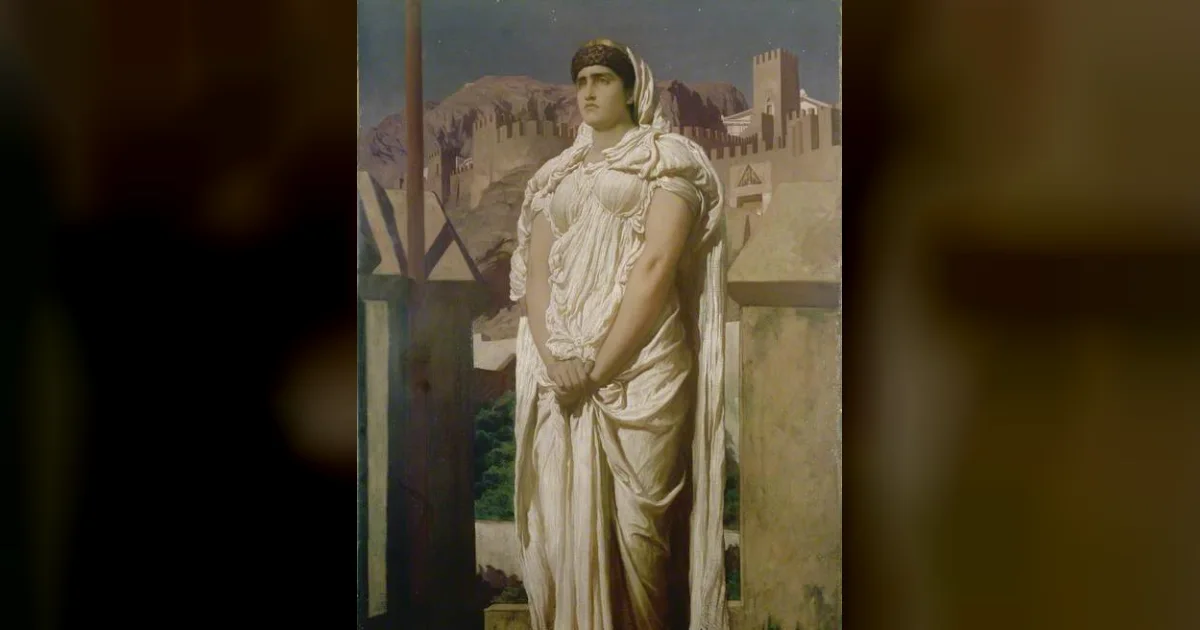
Who is Agamemnon in the Odyssey?
Agamemnon, son of Atreus, was the commander of the Achaean forces in the war at Troy and the brother of Menelaus. He never appears alive in the Odyssey. Instead, his fate is told by several different speakers, and each version adds detail: Zeus in Book 1, old Nestor in Book 3, Menelaus in Book 4, Agamemnon's own ghost in Book 11, and the ghost again in Book 24.
The basic story is the same each time. While Agamemnon was away at war, Aegisthus seduced his wife Clytemnestra. When the king came home, Aegisthus killed him at a feast. Years later Orestes, Agamemnon's son, returned from exile and killed Aegisthus to avenge his father.
Book 1: Zeus uses the story as a lesson
The very first speech by a god in the Odyssey is about Aegisthus. Zeus complains to the other gods that humans blame them for their troubles when they bring disaster on themselves:
“Look you now, how ready mortals are to blame the gods.”
In plain English: Zeus complains that people are too quick to say the gods are responsible for their misfortunes.
Zeus explains that the gods sent Hermes to warn Aegisthus not to marry the king's wife or kill him, because Orestes would grow up and take revenge. Aegisthus ignored the warning and has now paid for it. Later in Book 1, Athena, disguised as a guest, holds up Orestes as an example for Telemachus:
“Or hast thou not heard what fame the goodly Orestes won among all mankind when he slew his father's murderer, the guileful Aegisthus, for that he slew his glorious father?”
In plain English: Athena asks Telemachus whether he has heard how famous Orestes became for killing the man who murdered his father.
From its opening, then, the poem invites readers to compare the two households. Telemachus faces a house full of men who want his father's wife, and Athena suggests that a good son must act as Orestes did.
Books 3 and 4: Nestor and Menelaus tell the story
When Telemachus visits Nestor at Pylos, the old king tells him how Aegisthus slowly won over Clytemnestra. At first she refused him, and Agamemnon had left a singer at home to watch over her, but Aegisthus took the singer to a deserted island and left him there for the birds. After the murder Aegisthus ruled over Mycenae until Orestes came back from Athens and killed him.
In Sparta, Menelaus repeats what the sea god Proteus told him. Agamemnon kissed the ground in joy when he landed, unaware that a watchman paid by Aegisthus had seen him. Aegisthus hid armed men in his hall, invited the king to dinner, and struck him down at the table like an ox at its stall. Menelaus wept when he heard it, and he was still away when Orestes took his revenge.
Book 11: Agamemnon's ghost warns Odysseus
The most personal version comes from Agamemnon himself. In the underworld his ghost approaches Odysseus in tears and describes how he died: not at sea or in battle, but at a meal in the house of Aegisthus, with his men killed around him. His wife killed the prophetess Cassandra beside him and would not even close his eyes as he died.
From his own experience Agamemnon draws a bitter lesson about wives, and he tells Odysseus to be careful:
“Wherefore in thine own case be thou never gentle even to thy wife.”
In plain English: Agamemnon tells Odysseus never to be too trusting or easy-going, even with his own wife.
Yet he immediately makes an exception for Penelope, whom he praises for her good sense:
“Yet not upon thee, Odysseus, shall death come from thy wife, for very prudent and of an understanding heart is the daughter of Icarius, wise Penelope.”
In plain English: He adds that Odysseus has nothing to fear from Penelope, who is careful and sensible.
He still ends with practical advice. Odysseus should not land openly in his own country:
“in secret and not openly do thou bring thy ship to the shore of thy dear native land; for no longer is there faith in women.”
In plain English: He advises Odysseus to land in his homeland secretly, because women can no longer be trusted.
Odysseus follows this advice exactly. When he finally reaches Ithaca he lands without being recognised, disguises himself as a beggar, and tests the people in his house before revealing himself.
Book 24: Agamemnon praises Penelope
In the final book the ghosts of the suitors arrive in the underworld and tell Agamemnon what has happened in Ithaca. He responds by celebrating Odysseus's good fortune in having such a wife and contrasting her with the daughter of Tyndareus, his own wife, who murdered him:
“Not on this wise did the daughter of Tyndareus devise evil deeds and slay her wedded husband, and hateful shall the song regarding her be among men, and evil repute doth she bring upon all womankind, even upon her that doeth uprightly.”
In plain English: Agamemnon says his own wife acted very differently, killing her husband, so that the song about her will be hateful and will give a bad name to all women, even good ones.
Why the Agamemnon story matters in the Odyssey
Many readers see the Agamemnon story as a pattern against which the main plot is measured. Every role has a counterpart: Agamemnon and Odysseus are returning kings, Clytemnestra and Penelope are the wives left at home, Aegisthus and the suitors are the men who try to take the king's place, and Orestes and Telemachus are the sons. In Agamemnon's house every role goes wrong; in Odysseus's house the wife stays faithful and the son helps his father win back his home.
The repeated story also builds suspense. Because Agamemnon was killed the moment he walked into his own hall, the reader knows how dangerous a careless return could be, and the caution of Odysseus in the second half of the poem may be read as the direct result of what the dead king told him.
Frequently asked questions
Who killed Agamemnon in the Odyssey?
Aegisthus killed him at a feast after Agamemnon returned home from Troy. Agamemnon's ghost says his wife Clytemnestra took part, and that she killed Cassandra beside him.
What does Agamemnon tell Odysseus in the underworld?
He tells the story of his murder, warns Odysseus not to trust wives too readily, praises Penelope as an exception, and advises him to land in his homeland secretly.
Why is Agamemnon's story told in the Odyssey?
It works as a contrast to the story of Odysseus. Clytemnestra betrays her husband while Penelope stays faithful, and Orestes avenges his father while Telemachus helps his father return.
Who is Orestes in the Odyssey?
Orestes is Agamemnon's son, who comes back from exile and kills Aegisthus to avenge his father. Athena holds him up as a model for Telemachus.
More on PaperDue
Quotations are cited as (book.lines). The line numbers are those of the Greek text, which the translation marks about every fifth line, so a reference gives the marked lines around the passage.