The Odyssey Quotes, with Book and Line
Updated · The Odyssey by Homer
These are some of the most important passages in the Odyssey, grouped by theme, each with its book and line reference and a short explanation in plain English. The quotations come from A. T. Murray's prose translation, whose old-fashioned wording is explained after each one.
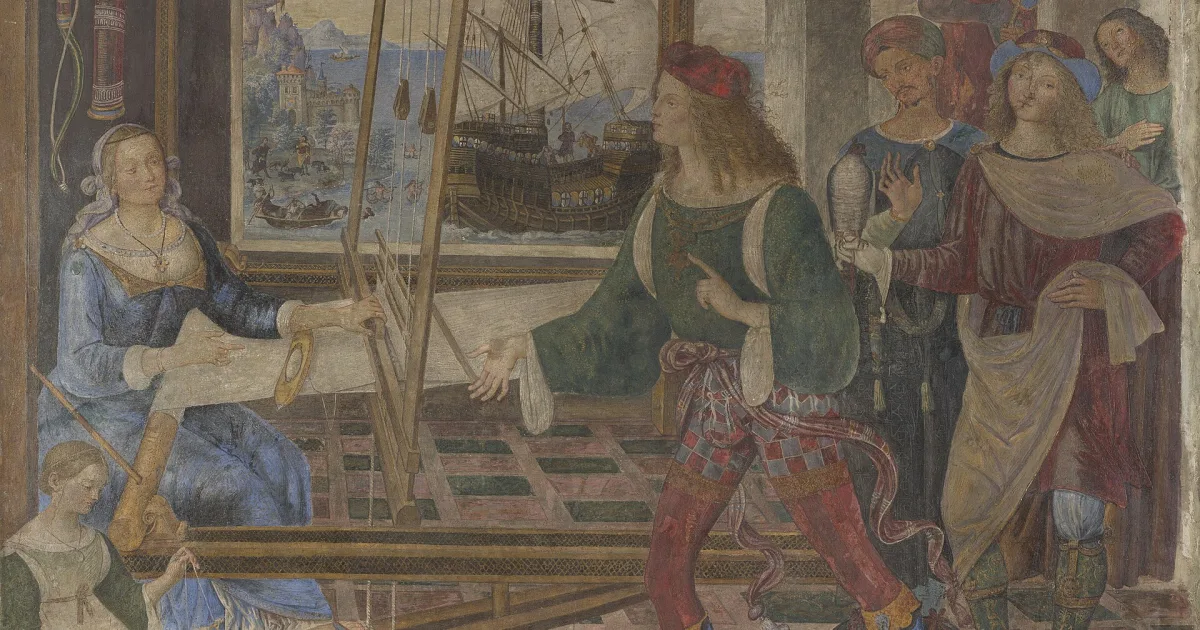
The opening of the Odyssey
Like the Iliad, the poem begins by calling on the Muse and naming its subject, here a man rather than a war. Within its opening sentences it has already told us the outcome: Odysseus will survive, but his companions will die through their own fault.
“Tell me, O Muse, of the man of many devices, who wandered full many ways after he had sacked the sacred citadel of Troy. Many were the men whose cities he saw and whose mind he learned, aye, and many the woes he suffered in his heart upon the sea, seeking to win his own life and the return of his comrades.”
In plain English: The poet asks the Muse to sing about a clever man who wandered for years after the sack of Troy, saw many peoples, and suffered at sea while trying to save himself and bring his men home.
Quotes about home
Odysseus's longing for home drives the whole plot, and he says so more than once: to the king of the Phaeacians when he begins his story, and earlier to Calypso, when she offers to make him immortal if he stays.
“So true is it that naught is sweeter than a man's own land and his parents, even though it be in a rich house that he dwells afar in a foreign land away from his parents.”
In plain English: Nothing is better than your own country and family, Odysseus says, however rich the place you live in abroad.
“For ere this I have suffered much and toiled much amid the waves and in war; let this also be added unto that.”
In plain English: He tells Calypso he has already been through so much at sea and in war that he can bear one more hardship.
Quotes about the gods and fate
The poem keeps asking how far the gods are to blame for human suffering. Zeus raises the question himself at the very start, the king of the Phaeacians later suggests that the gods send disasters to give poets something to sing about, and the disguised Odysseus warns the suitors how quickly fortune can turn.
“It is from us, they say, that evils come, but they even of themselves, through their own blind folly, have sorrows beyond that which is ordained.”
In plain English: Zeus complains that people say their troubles come from the gods, when in fact their own foolishness brings them more suffering than fate intended.
“This the gods wrought, and spun the skein of ruin for men, that there might be a song for those yet to be born.”
In plain English: King Alcinous suggests that the gods made the Trojan War happen so that later generations would have something to sing about.
“Nothing feebler does earth nurture than man, of all things that on earth are breathing and moving.”
In plain English: The disguised Odysseus warns a suitor that no creature on earth is weaker than a human being.
Quotes about death and the underworld
In the land of the dead, the greatest warrior of the Trojan War tells Odysseus that glory is worth nothing after death. Back on Ithaca, the most moving recognition in the poem comes not from a person but from a neglected old hunting dog.
“I should choose, so I might live on earth, to serve as the hireling of another, of some portionless man whose livelihood was but small, rather than to be lord over all the dead that have perished.”
In plain English: Achilles says he would rather be the hired help of a poor farmer, as long as he was alive, than rule over all the dead.
“But as for Argos, the fate of black death seized him straightway when he had seen Odysseus in the twentieth year.”
In plain English: The old dog Argos dies as soon as he has seen his master again after twenty years.
Quotes about love and marriage
Odysseus's advice to the young princess Nausicaa describes the kind of marriage he is trying to get back to. Much later, Penelope talks to the beggar she does not yet recognise about a dream that seems to promise her husband's return, and wonders whether to trust it.
“For nothing is greater or better than this, when man and wife dwell in a home in one accord, a great grief to their foes and a joy to their friends; but they know it best themselves.”
In plain English: Odysseus tells Nausicaa that nothing is better than a husband and wife who live together in harmony: it annoys their enemies, pleases their friends, and makes the couple themselves happiest of all.
“For two are the gates of shadowy dreams, and one is fashioned of horn and one of ivory.”
In plain English: Penelope says that dreams come through two gates, one of horn and one of ivory, and only some of them come true.
Quotes about hospitality
The poor swineherd Eumaeus, who does not know that the beggar in front of him is his master, explains why he must still treat him well.
“for from Zeus are all strangers and beggars, and a gift, though small, is welcome from such as we;”
In plain English: Eumaeus explains that strangers and beggars are under Zeus's protection, so even a small gift from a poor man like him counts.
Quotes about temptation
The Sirens tempt Odysseus not with pleasure but with knowledge, which may be why their song works on him so well.
“For never yet has any man rowed past this isle in his black ship until he has heard the sweet voice from our lips. Nay, he has joy of it, and goes his way a wiser man. For we know all the toils that in wide Troy the Argives and Trojans endured through the will of the gods, and we know all things that come to pass upon the fruitful earth.”
In plain English: The Sirens claim that every sailor who hears them goes home wiser, because they know everything about the war at Troy and everything that happens in the world.
Frequently asked questions
What is the most famous quote from the Odyssey?
Probably the opening line, in which the poet calls on the Muse to sing of a resourceful, much-travelled hero and his long journey after Troy fell.
What does Achilles say to Odysseus in the underworld?
He says he would rather be a poor man's hired servant on earth than king over all the dead, and asks for news of his son.
What does Zeus say about blaming the gods?
At the start of the poem he complains that mortals blame the gods for their troubles, when their own folly brings them sorrows beyond what fate intended.
More on PaperDue
Quotations are cited as (book.lines). The line numbers are those of the Greek text, which the translation marks about every fifth line, so a reference gives the marked lines around the passage.
Other sources: Homer, The Odyssey, translated by A. T. Murray (Loeb Classical Library, 1919) (Perseus Digital Library, Tufts University); Homer, The Iliad, translated by A. T. Murray (Loeb Classical Library, 1924–1925) (Perseus Digital Library, Tufts University)