The Odyssey Books 21–24 Summary: The Bow, the Suitors and the Ending
Updated · The Odyssey by Homer
In Books 21–24 Odysseus, still disguised as a beggar, strings his own bow, wins Penelope's contest and kills the suitors with the help of Telemachus and two loyal herdsmen. Penelope tests him with the secret of their bed before she accepts him, and he then reveals himself to his father Laertes. The poem ends when Athena stops the families of the dead suitors from fighting Odysseus and makes a lasting peace on Ithaca.
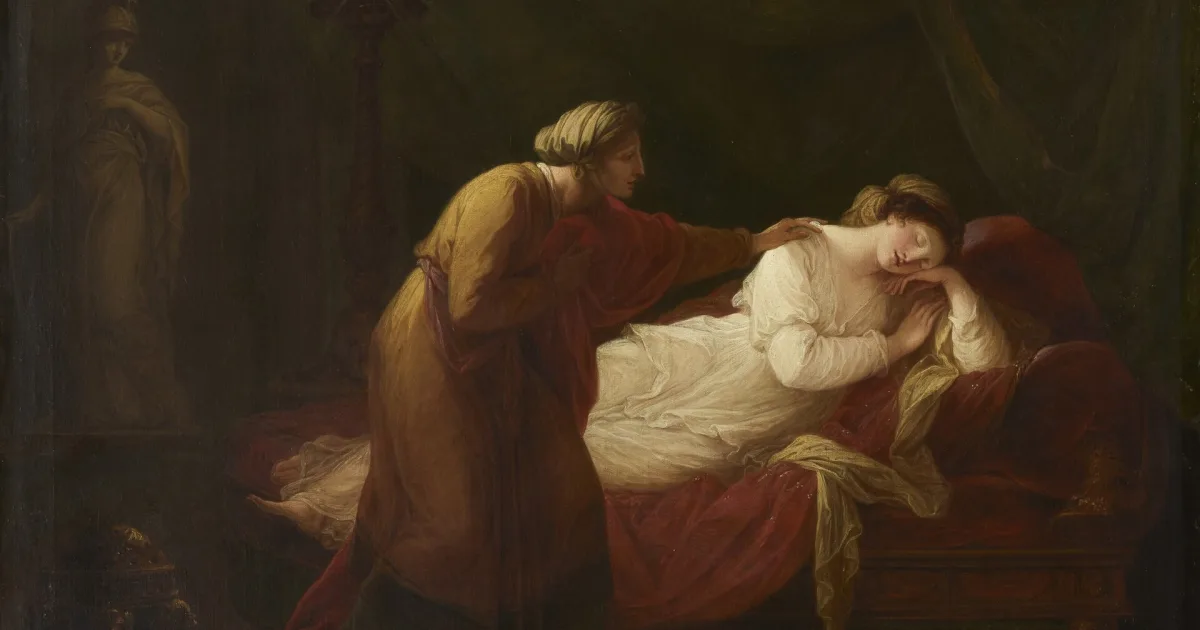
Odyssey Book 21 summary: the contest of the bow
Penelope brings down the great bow, a gift Odysseus received long ago from Iphitus, son of Eurytus, and offers herself to whichever suitor can string it and shoot through the twelve axes. Telemachus tries first and would have managed it on his fourth attempt if his father had not stopped him with a look. Leiodes fails, and the suitors warm and grease the bow without success. Antinous suggests putting the contest off until a feast day.
Outside, Odysseus reveals himself to Eumaeus and Philoetius by showing them his scar, and tells them to lock the doors of the hall and the courtyard. Back inside, he asks to try the bow. The suitors are outraged, but Penelope says the beggar should have his turn, and Telemachus sends her upstairs before the swineherd puts the bow in his master's hands.
Odysseus strings it as easily as a musician fits a new string to a lyre.
“And he held it in his right hand, and tried the string, which sang sweetly beneath his touch, like to a swallow in tone.”
In plain English: Odysseus plucks the string of the bow, and it sings with a high, clear note like a bird.
Zeus thunders, and Odysseus shoots an arrow cleanly through every axe without rising from his stool.
Odyssey Book 22 summary: the killing of the suitors
Odysseus leaps onto the threshold and aims his next arrow at Antinous, who is lifting a cup of wine and has no idea he is in danger.
“But Odysseus took aim, and smote him with an arrow in the throat, and clean out through the tender neck passed the point;”
In plain English: Odysseus shoots Antinous through the throat, and the arrowhead comes out through his neck.
The suitors at first think the shot was an accident. Then Odysseus tells them who he is and what they have done.
“Now over you one and all have the cords of destruction been made fast.”
In plain English: Odysseus tells the suitors that every one of them is now trapped and cannot escape death.
Eurymachus offers to repay everything they have eaten, and Odysseus refuses. Eurymachus charges and is shot. Telemachus fetches armour and spears from the storeroom, but he leaves its door open, and the goatherd Melanthius starts carrying weapons to the suitors until Eumaeus and Philoetius catch him and tie him up. Athena appears in the likeness of Mentor and then raises her aegis, and the suitors scatter in terror and are cut down.
Leiodes, the suitors' priest, begs for mercy and is killed. The minstrel Phemius and the herald Medon are spared after Telemachus speaks for them. When the fighting is over, Eurycleia names the maids who betrayed the house; they are made to clean the hall and are then put to death, and Melanthius is punished brutally. Odysseus purifies the hall with sulphur and fire.
Odyssey Book 23 summary: Penelope and the test of the bed
Eurycleia runs upstairs to wake Penelope, who at first refuses to believe her and thinks a god must have punished the suitors. Even face to face with her husband she sits in silence, and Telemachus scolds her for her hard heart. Penelope answers that she and Odysseus have secret signs that only the two of them know.
She tests him by telling the nurse to move their bed out of the bedroom. Odysseus is shocked and angry, because he built that bed himself around a living tree and no one should be able to move it.
“A bush of long-leafed olive was growing within the court, strong and vigorous, and girth it was like a pillar.”
In plain English: A big olive tree once grew in the courtyard, with a trunk as thick as a column, and he built the room around it.
Only he could know this, and Penelope gives way.
“So he spoke, and her knees were loosened where she sat, and her heart melted, as she knew the sure tokens which Odysseus told her.”
In plain English: When he describes the bed, Penelope goes weak and her heart softens, because only her husband could know this.
Athena holds back the dawn to give them a longer night. Odysseus warns Penelope that Teiresias has told him of one more journey he must make, and then he tells her the story of his wanderings. In the morning he sets out with Telemachus and the herdsmen to see his father.
Odyssey Book 24 summary: how the Odyssey ends
Hermes leads the ghosts of the suitors down to the underworld. There the shade of Agamemnon hears the story from Amphimedon and praises Penelope for her loyalty, setting her against the wife who murdered him.
“Therefore the fame of her virtue shall never perish, but the immortals shall make among men on earth a pleasant song in honor of constant Penelope.”
In plain English: Agamemnon says that Penelope's faithfulness will be remembered for ever, and the gods will make songs about it.
On Ithaca, Odysseus finds Laertes working alone in his orchard in ragged clothes. He first tests his father with a false story, but when the old man breaks down in grief, he reveals himself and proves it with his scar and with the trees Laertes once named for him as a child.
Meanwhile the families of the dead suitors gather. Eupeithes, the father of Antinous, leads them out to take revenge, and the small band of Odysseus, Telemachus, Laertes and their servants meets them. Laertes, strengthened by Athena, kills Eupeithes with a spear. Just as Odysseus and his son charge, Athena calls out.
“Refrain, men of Ithaca, from grievous war, that with all speed you may part, and that without bloodshed.”
In plain English: Athena orders the people of Ithaca to stop the fighting at once and go home without more killing.
Zeus hurls a thunderbolt, Athena tells Odysseus to stop, and he obeys. Still in the likeness of Mentor, she makes the two sides swear a lasting peace, and the poem ends there. Odysseus does not die in the Odyssey; he is home, reunited with his family, and at peace with his people.
What the ending of the Odyssey means
The final books bring together the threads the poem has been weaving since Book 1. The contest of the bow turns the beggar back into the king, and the bed scene turns the stranger back into a husband. Many readers see the bed as a symbol of the marriage itself: rooted, hand-made and impossible to move.
The violence of Book 22 is harsh, and readers have long been troubled by it, especially the punishment of the maids. The poem presents the killing as justice for the suitors' crimes against a house and its guests, and it arguably gives the gods the last word: Athena does not let the cycle of revenge continue, and the peace she imposes, rather than more killing, is where the story stops.
Frequently asked questions
How does the Odyssey end?
With peace on Ithaca. After Odysseus kills the suitors, their families come to take revenge. Laertes kills Eupeithes, then Athena stops the fighting and, in the likeness of Mentor, makes both sides swear a lasting peace.
Who is the first suitor Odysseus kills?
Antinous. Odysseus shoots him through the throat as he lifts a cup of wine, before the other suitors understand who the beggar is.
How does Penelope test Odysseus?
She orders the nurse to move their bed out of the bedroom. Odysseus angrily replies that it cannot be moved, because he built it himself around the trunk of an olive tree, and this secret proves who he is.
Does Odysseus die at the end of the Odyssey?
No. The poem ends with Odysseus alive, home and at peace with the families of the suitors. Teiresias foretells a gentle death in old age far from the sea, but that lies beyond the end of the poem.
More on PaperDue
Quotations are cited as (book.lines). The line numbers are those of the Greek text, which the translation marks about every fifth line, so a reference gives the marked lines around the passage.