The Odyssey Books 5–8 Summary: Calypso, the Raft and the Phaeacians
Updated · The Odyssey by Homer
Books 5–8 of the Odyssey bring Odysseus himself onto the stage at last. Calypso is ordered to release him, Poseidon wrecks the raft he builds, and he washes up on Scheria, where the princess Nausicaa helps him and her parents, Alcinous and Arete, receive him as an honoured guest.
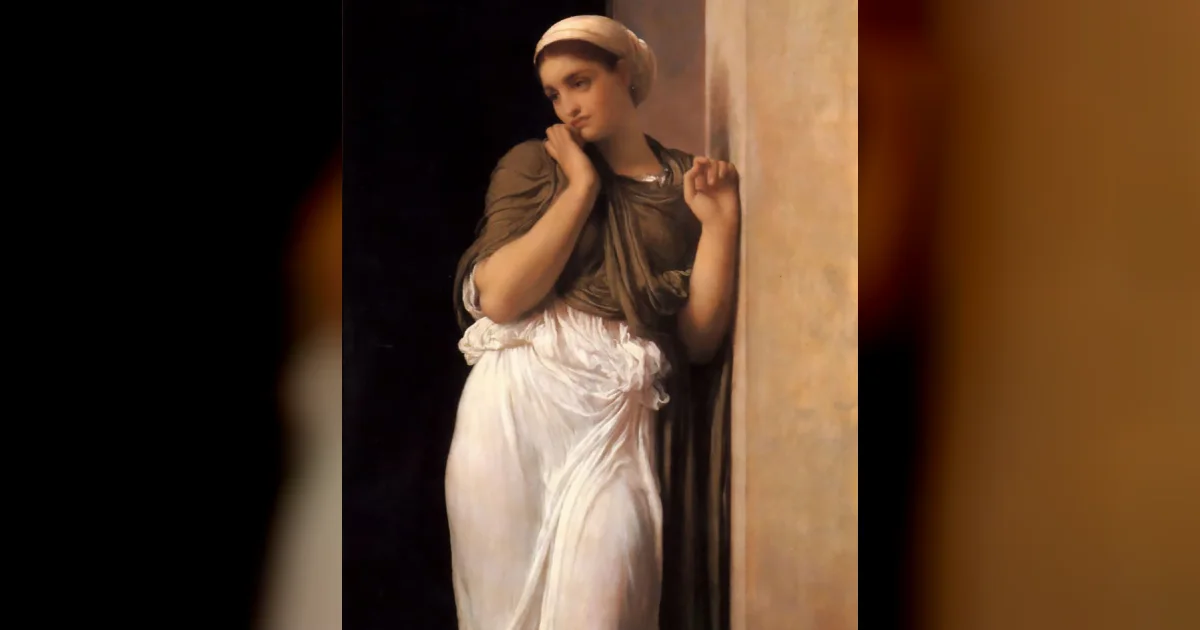
Odyssey Book 5 summary: Calypso lets Odysseus go
Athena again pleads for Odysseus among the gods, and Zeus sends Hermes to the nymph Calypso with the gods' decision: she must let him leave. Hermes finds her in a cave surrounded by woods, vines and springs, a place so lovely that even a god stops to admire it. Odysseus is not inside. He is sitting by the sea, as he does every day.
“Him she found sitting on the shore, and his eyes were never dry of tears, and his sweet life was ebbing away, as he longed mournfully for his return, for the nymph was no longer pleasing in his sight.”
In plain English: Calypso found him on the beach crying, wasting away with longing to go home, because he no longer loved the nymph.
Calypso protests that the gods are jealous whenever a goddess loves a mortal, but she obeys. She gives Odysseus an axe and tools, shows him where the tallest trees grow, and he builds a raft. She supplies food, wine and clothing and sends a fair wind behind him.
Odysseus steers by the stars, and the facts of the voyage are exact: for seventeen days he sails, and on the eighteenth day he sees the mountains of the Phaeacians. Then Poseidon, returning from the Ethiopians, catches sight of him and raises a storm that smashes the raft.
“Thrice blessed those Danaans, aye, four times blessed, who of old perished in the wide land of Troy, doing the pleasure of the sons of Atreus.”
In plain English: In the storm he envies the men who died at Troy fighting for the sons of Atreus, because at least they died with honour and were remembered.
The sea goddess Ino, also called Leucothea, takes pity on him. She gives him her veil and tells him to strip off his heavy clothes and swim for shore. After two days and nights in the water he reaches the mouth of a river, crawls ashore, and falls asleep under a heap of leaves between two bushes.
Book 6: Nausicaa
Athena appears in a dream to Nausicaa, the daughter of Alcinous, the king, and suggests that she take the family's clothes to the river to wash them. After the washing, Nausicaa and her maids play ball on the shore, and their shouts wake Odysseus. Naked, salt-caked and wild-looking, he holds a branch in front of himself and approaches. The maids run, but Nausicaa stands her ground.
Odysseus decides that it would be wiser to plead from a distance than to clasp her knees, and his speech is a masterpiece of tact.
“I beseech thee, O queen,—a goddess art thou, or art thou mortal?”
In plain English: He begs her for help and flatters her by asking whether she is a goddess or a human girl.
Nausicaa gives him clothes and food and explains who her people are. Careful of gossip, she tells him to follow the wagon only as far as a grove outside the city and then to walk in alone, go straight to her mother and ask the queen for help.
Book 7: the palace of Alcinous
Athena wraps Odysseus in a mist so that he can walk through the city unseen. The palace of Alcinous shines with bronze, silver and gold, and its orchard and vineyard bear fruit all year round. As Nausicaa advised, Odysseus throws himself at the feet of Arete, the queen, and begs for a ship home. The Phaeacians are astonished to see a stranger appear among them out of nowhere.
Alcinous raises him up and promises him passage home. When Arete recognizes the clothes he is wearing as her own household's work, Odysseus explains how he came to be there: Calypso kept him on her island Ogygia for seven years, promising to make him immortal, until at last she sent him away on a raft. He still does not give his name.
Book 8: games and the songs of Demodocus
Alcinous holds a feast and games in his guest's honour. When a young man of the Phaeacians named Euryalus sneers that the stranger looks more like a merchant than an athlete, Odysseus angrily seizes a discus heavier than any the young men used and throws it far beyond their marks.
The blind minstrel Demodocus sings three songs. The first is a quarrel between Odysseus and Achilles in the war at Ilios; the second, a comic tale of how Hephaestus trapped Ares and Aphrodite in a net. At the stranger's own request, the third is about the horse of wood.
“But come now, change thy theme, and sing of the building of the horse of wood, which Epeius made with Athena's help, the horse which once Odysseus led up into the citadel as a thing of guile, when he had filled it with the men who sacked Ilios.”
In plain English: Odysseus asks the singer to tell the story of the wooden horse that Epeius built and that he himself led into Ilios full of warriors.
As the minstrel sings of the fall of the city, Odysseus breaks down.
“But the heart of Odysseus was melted and tears wet his cheeks beneath his eyelids.”
In plain English: Hearing the song, Odysseus was overcome with emotion and began to cry.
Homer compares his weeping to the grief of a woman whose husband has died defending his city, so the conqueror is pictured as a victim of the war he won. Alcinous, who alone notices his tears, finally asks the stranger to say who he is and where he has wandered. His answer fills the books that follow.
What Books 5–8 show about Odysseus
These books can be read as a passage from isolation back into human society. Odysseus moves from a goddess's island outside time, through a near-drowning, to a court where people wash clothes, play games and hold feasts. He arrives with nothing, not even his name, and the Phaeacians honour him before they know who he is.
They also show the qualities that keep him alive: endurance on the raft, careful speech with Nausicaa, courtesy to Arete, and pride when Euryalus insults him. Many readers see the choice he makes on Calypso's island, a mortal homecoming over an immortal life, as the key to the whole poem.
Finally, the songs of Demodocus set up the next section. Hearing his own story told by someone else moves Odysseus to tears, and the request that follows turns him into the storyteller of his own adventures, which suggests why the most famous episodes of the poem are told in his voice.
Frequently asked questions
Why does Calypso let Odysseus go?
Zeus sends Hermes to tell her that the gods have decided Odysseus must return home. She complains about the gods' jealousy but obeys and helps him build a raft.
Who is Nausicaa in the Odyssey?
Nausicaa is the daughter of Alcinous, king of the Phaeacians. She finds Odysseus on the shore, gives him clothes and food, and tells him how to win her mother's help.
Who are the Phaeacians?
They are a seafaring people living on Scheria, ruled by Alcinous and Arete. They welcome Odysseus, hold games in his honour and later carry him home in one of their ships.
Why does Odysseus cry at the Phaeacian feast?
The minstrel Demodocus sings about the wooden horse and the fall of the city, and hearing his own past sung aloud overwhelms him with grief.
More on PaperDue
Quotations are cited as (book.lines). The line numbers are those of the Greek text, which the translation marks about every fifth line, so a reference gives the marked lines around the passage.