The Odyssey Books 9–12 Summary: The Wanderings of Odysseus
Updated · The Odyssey by Homer
In Books 9–12 of the Odyssey, Odysseus tells the Phaeacians the story of his wanderings since Troy, from the Cyclops and Circe to the land of the dead and the Sirens. Every one of his ships and men is lost along the way, the last of them after the crew kill the cattle of Helios, and he alone reaches the island of Calypso.
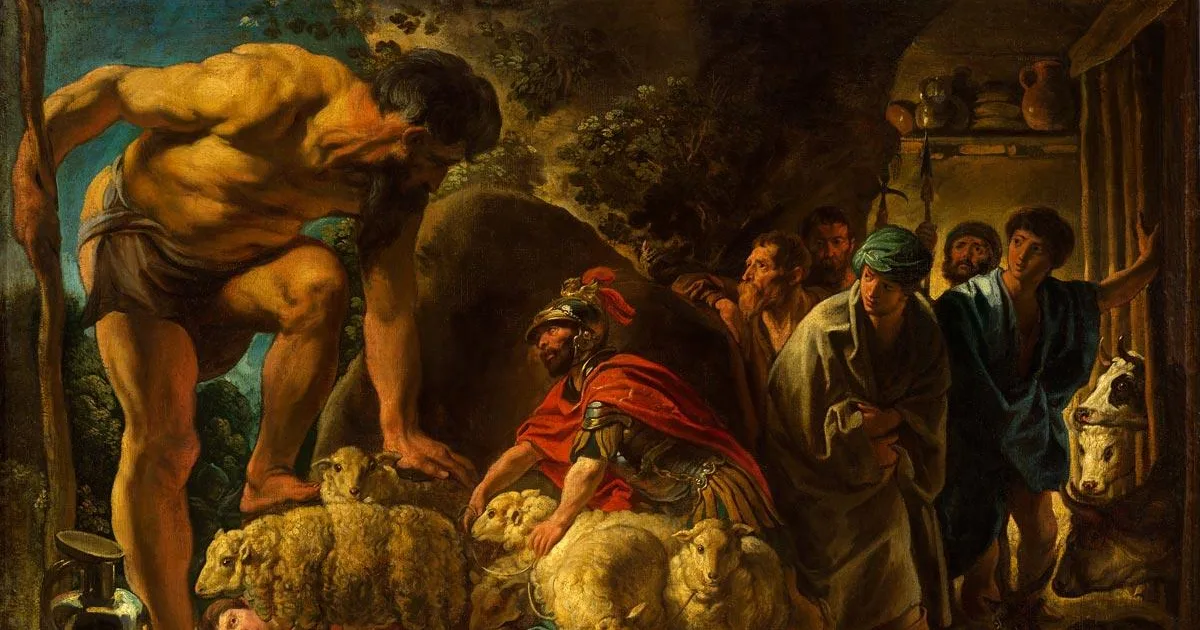
Who tells the story in Books 9–12
These books are a flashback. At the court of Alcinous, the stranger finally names himself, and the adventures that follow are told in his own voice, as a story within the story. Readers sometimes notice that this makes him the only witness to his most famous deeds.
“I am Odysseus, son of Laertes, who am known among men for all manner of wiles, and my fame reaches unto heaven.”
In plain English: He reveals who he is: the son of Laertes, known everywhere for his tricks and cleverness, whose fame reaches the sky.
Book 9: the Cicones, the Lotus-eaters and the Cyclops' cave
Sailing from Ilios, Odysseus and his men raid the city of the Cicones, but they linger to feast and are driven off with losses. A storm carries them to the Lotus-eaters, whose honey-sweet fruit makes the men who taste it forget their homecoming, and Odysseus has to drag them back to the ships.
Next they reach the land of the Cyclopes, giants who live without laws or assemblies. Odysseus takes twelve men and a skin of strong wine into a cave full of cheeses and lambs. Its owner, the Cyclops Polyphemus, returns with his flocks, blocks the entrance with a huge stone and eats two of the men. Asked his name, Odysseus gives a trick answer.
“Noman is my name, Noman do they call me—my mother and my father, and all my comrades as well.”
In plain English: He tells the Cyclops that his name is Noman, meaning no one, a trick that pays off when the giant later cries out that Noman is hurting him.
When the giant falls into a drunken sleep, Odysseus and his men drive a sharpened, fire-hardened stake into his single eye. The other Cyclopes come running at his screams, but when he shouts that Noman is hurting him they go away. In the morning the men escape tied beneath his rams. Safely aboard, Odysseus cannot resist taunting him and revealing his real name.
“Cyclops, if any one of mortal men shall ask thee about the shameful blinding of thine eye, say that Odysseus, the sacker of cities, blinded it, even the son of Laertes, whose home is in Ithaca.”
In plain English: Proud of his escape, Odysseus shouts his true name and home to the blinded giant, which allows Poseidon to take revenge.
That boast proves costly. Polyphemus prays to his father Poseidon to keep Odysseus from ever reaching home, or, if he must, to let him arrive late, alone and on a ship not his own, to find trouble in his house. Poseidon's anger shadows the rest of the voyage.
Book 10: Aeolus, the Laestrygonians and Circe
Aeolus, keeper of the winds, gives Odysseus a bag holding every wind except the one he needs to blow him home. Within sight of Ithaca, while Odysseus sleeps, the crew open the bag, suspecting treasure, and the winds blow them all the way back. Then the giant Laestrygonians smash every ship but one with rocks.
On the island of the goddess Circe, a scouting party led by Eurylochus enters her house, and she drugs the men and turns them into pigs. Only Eurylochus stays outside to raise the alarm.
“And they had the heads, and voice, and bristles, and shape of swine, but their minds remained unchanged even as before.”
In plain English: Circe's magic gave the men the bodies and voices of pigs, but they still thought like human beings.
Hermes gives Odysseus an herb that protects him from her magic, and when the drug fails Circe yields, restores his men and becomes his lover. They stay with her a full year before his crew remind him of home. Circe tells him he must first visit the land of the dead to consult the prophet Teiresias.
Book 11: the land of the dead
At the edge of the world Odysseus digs a pit and pours blood for the spirits. First comes Elpenor, a young crewman who fell from Circe's roof and was left unburied. Then Teiresias warns him not to touch the cattle of Helios and foretells trouble at home and a peaceful death in old age, far from the sea. Next comes his mother, Anticleia, whom he had left alive when he sailed for Troy.
“nay, it was longing for thee, and for thy counsels, glorious Odysseus, and for thy tender-heartedness, that robbed me of honey-sweet life.”
In plain English: His mother says she did not die of illness: she died because she missed her son and his kindness so much.
Three times he tries to embrace her, and three times she slips through his arms like a shadow. He also meets a procession of famous women, then the ghosts of his comrades from the war: Agamemnon, who tells how his wife helped murder him, and Achilles, who says he would rather be a hired labourer on earth than king among the dead. The spirit of Aias still refuses to speak to him over the quarrel about the armour of Achilles.
Book 12: the Sirens, Scylla and Charybdis
Back on her island, Circe warns Odysseus of the dangers ahead. As they pass the Sirens, he plugs his crew's ears with wax and has himself tied to the mast so that he alone can hear their song.
“Come hither, as thou farest, renowned Odysseus, great glory of the Achaeans; stay thy ship that thou mayest listen to the voice of us two.”
In plain English: The Sirens call him by name, flatter him as the pride of the Achaeans, and invite him to stop and listen to their song.
Next the ship must pass between Scylla, a monster with six heads who seizes six men from the deck, and Charybdis, a whirlpool that swallows the sea. On the island Thrinacia, storm winds trap them for a month, and while Odysseus sleeps, Eurylochus persuades the starving men to kill the sacred cattle of Helios. Zeus destroys the ship with a thunderbolt. Every man drowns except Odysseus, who clings to the wreckage, is swept back past Charybdis, and drifts to Ogygia, the island of Calypso. Here his long story ends.
What the wanderings mean
Many readers treat these adventures as a series of tests of different temptations: forgetting home (the lotus), pride (the boast to the Cyclops), comfort (Circe), and hunger (the cattle). Odysseus survives by cunning and restraint, but the men who share his voyage often fail exactly where those qualities are needed.
The journey to the dead suggests the cost of the heroic life he has lived. The greatest warrior of all tells him that glory means little in the underworld, and his mother has died of grief at his absence. These encounters can be read as reasons why Odysseus chooses home and mortality over any other prize.
Frequently asked questions
Which book of the Odyssey is the Cyclops in?
The Cyclops episode is in Book 9. Odysseus tells it to his hosts at the court of Alcinous as part of his account of his wanderings.
How does Odysseus escape the Cyclops?
He gets Polyphemus drunk, blinds his single eye with a heated stake, calls himself Noman so that the other Cyclopes do not help, and slips out of the cave tied under the giant's rams.
How long does Odysseus stay with Circe?
A full year. His men finally remind him of home, and Circe sends him first to the land of the dead.
How does Odysseus get past the Sirens?
On Circe's advice, he fills his men's ears with wax and has them bind him to the mast so that he can listen to the song without steering toward it.
Why do Odysseus's men die?
After Teiresias and Circe warned them, the crew still kill and eat the cattle of Helios on Thrinacia while Odysseus sleeps. Zeus wrecks their ship in punishment, and only Odysseus survives.
More on PaperDue
Quotations are cited as (book.lines). The line numbers are those of the Greek text, which the translation marks about every fifth line, so a reference gives the marked lines around the passage.